Everything about Fifth Generation Computer Systems
1982 Japanese initiative to develop advanced computers
The Fifth Generation Computer Systems was a 10-year initiative launched in 1982 by Japan's Ministry of International Trade and Industry (MITI) to develop computers based on massively parallel computing and logic programming. The project aimed to create an "epoch-making computer" with supercomputer-like performance and to establish a platform for future advancements in artificial intelligence. Although FGCS was noted as ahead of its time, and its ambitious goals contributed significantly to the development of concurrent logic programming, it ultimately ended in commercial failure. Wikipedia →
🧭 Start here: a 6-step reading path
- Read the overview: Fifth Generation Computer SystemsA 5-minute orientation
- Pick up a classic book: The HamiltonianThe most-reprinted book on the subject
- Read the landmark paper: Japan's Fifth Generation Computer SystemsCited 38 times
- Go sideways: Concurrent logic programmingA closely related topic
- Go sideways: Ehud ShapiroA closely related topic
📖 Definitions
No dictionary entry for this exact phrase.
🗂️ The subject at a glance
🏆 Landmark papers (most cited)
Japan's Fifth Generation Computer Systems
Fifth-Generation Computer Systems: A Japanese Project
Research on Parallel Machine Architecture for Fifth-Generation Computer Systems
A unified approach to artificial intelligence, pattern recognition, image processing and computer vision in fifth-generation computer systems
Logic programming as the integrator of the Fifth Generation Computer Systems project
Pattern recognition, image processing and computer vision in fifth generation computer systems
Overview to the Fifth Generation Computer System project
An overview and appraisal of the Fifth Generation Computer System project
📚 Books worth reading
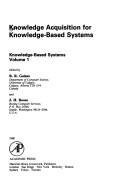 The HamiltonianBrian R. Gaines, John H. Boose · 1988
- 📕Fifth generation managementCharles M. Savage · 1987
- 📕Fifth generation management for fifth generation technology · 1987
- 📕Razgovor s kompʹi︠u︡teromI. N. Gorelov · 1987
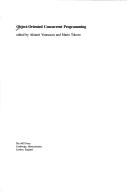 Object-oriented concurrent programmingAkinori Yonezawa, Mario Tokoro · 1987
Ranked by number of editions on Open Library, a rough measure of how lasting a book is.
🔗 Related topics
- Concurrent logic programming Concurrent logic programming is a variant of logic programming designed for parallel computing in which programs are sets of guarded Horn clauses of the…
- Ehud Shapiro Ehud Shapiro (Hebrew: אהוד שפירא; born 1955) is an Israeli scientist, entrepreneur, artist, and political activist who is Professor Emeritus of Computer…
- Swedish Institute of Computer Science RISE SICS (previously Swedish Institute of Computer Science) is a leading research institute for applied information and communication technology in Sweden…
- Indeterminacy in concurrent computation Indeterminacy in concurrent computation is concerned with the effects of indeterminacy in concurrent computation. Computation is an area in which indeterminacy…
- Alvey Programme The Alvey Programme was a British government sponsored research programme in information technology that ran from 1984 to 1990. The programme was a reaction…
- History of general-purpose CPUs The history of general-purpose CPUs is a continuation of the earlier history of computing hardware. In the early 1950s, each computer design was unique…
- Prolog Prolog is a logic programming language that has its origins in artificial intelligence, automated theorem proving, and computational linguistics. Prolog…
- Central processing unit A central processing unit (CPU), also known as a central processor, main processor, or simply processor, is the primary processor in a given computer.…