Live briefing

Everything about Fibonacci sequence
Numbers obtained by adding the two previous ones
In mathematics, the Fibonacci sequence is a sequence in which each element is the sum of the two elements that precede it. Numbers that are part of the Fibonacci sequence are known as Fibonacci numbers, commonly denoted Fn . The initial elements of the sequence are F1 = 1 and F2 = 1, though many authors also include a zeroth element F0 = 0. Starting from F0, the sequence begins0, 1, 1, 2, 3, 5, 8, 13, 21, 34, 55, 89, 144, ... Wikipedia →
🧭 Start here: a 6-step reading path
- Read the overview: Fibonacci sequenceA 5-minute orientation
- Skim a recent paper: Copper ratio obtained by generalizing the Fibonacci sequenceInfluential work since 2022
- Pick up a classic book: The Da Vinci CodeThe most-reprinted book on the subject
- Read the landmark paper: A Generalized Fibonacci SequenceCited 260 times
- Go sideways: Lucas numberA closely related topic
- Go sideways: Generalizations of Fibonacci numbersA closely related topic
📖 Definitions
No dictionary entry for this exact phrase.
🏆 Landmark papers (most cited)
A Generalized Fibonacci Sequence
Another Generalized Fibonacci Sequence
Full cubes in the Fibonacci sequence
Fibonacci Sequence Modulo m
On the Fibonacci Almost Convergent Sequence Space and Fibonacci Core
The sequence of return words of the Fibonacci sequence
Hyperbolic Fibonacci Sequence
Optimal Control and the Fibonacci Sequence
🆕 Influential since 2022
Copper ratio obtained by generalizing the Fibonacci sequence
q-Fibonacci sequence spaces and related matrix transformations
Golden lichtenberg algorithm: a fibonacci sequence approach applied to feature selection
Bi-periodic $r$-Fibonacci sequence and bi-periodic $r$-Lucas sequence of type $s$
GOLDEN RATIO AND FIBONACCI SEQUENCE: UNIVERSAL FOOTPRINTS OF THE GOLDEN FLOW
📚 Books worth reading
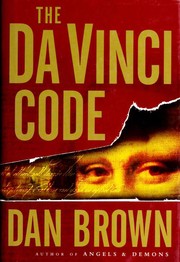 The Da Vinci CodeDan Brown · 2003
 Applications of Fibonacci NumbersA. F. Horadam, A. N. Philippou · 1989
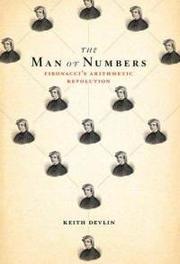 The Man of NumbersKeith J. Devlin · 2011
 Rabbits Rabbits EverywhereAnn McCallum · 2007
- 📕Horrible Harry cracks the codeSuzy Kline · 2007
 Fibonacci and catalan numbersRalph P. Grimaldi · 2012
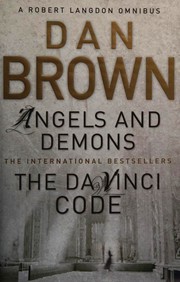 Novels (Angels & Demons / Da Vinci Code)Dan Brown · 2003
 BlockheadJoseph D'Agnese · 2010
Ranked by number of editions on Open Library, a rough measure of how lasting a book is.
🔗 Related topics
- Lucas number The Lucas sequence is an integer sequence named after the mathematician François Édouard Anatole Lucas (1842–1891), who studied both that sequence and…
- Generalizations of Fibonacci numbers In mathematics, the Fibonacci numbers form a sequence defined recursively by: Fn={0n=01n=1Fn−1+Fn−2n>1 That is, after two starting values, each number…
- Random Fibonacci sequence In mathematics, the random Fibonacci sequence is a stochastic analogue of the Fibonacci sequence defined by the recurrence relation fn=fn−1±fn−2, where…
- Golden field In mathematics, ℚ(5), sometimes called the golden field, is a number system consisting of the set of all numbers a+b5, where a and b are both rational…
- Golden ratio In mathematics, two quantities are in the golden ratio if their ratio is the same as the ratio of their sum to the larger of the two quantities. Expressed…
- Square root of 5 The square root of 5, denoted 5, is the positive real number that, when multiplied by itself, gives the natural number 5. Along with its conjugate −5…
- Cassini and Catalan identities Cassini's identity (sometimes called Simson's identity), Catalan's identity and Vajda's identity are mathematical identities for the Fibonacci numbers…
- Cyclotomic polynomial In mathematics, the n-th cyclotomic polynomial, for any positive integer n, is the unique irreducible polynomial with integer coefficients that is a divisor…