Everything about Facebook like button
Feature of the social networking website Facebook

The like button on the social networking website Facebook was first enabled on February 9, 2009. The like button enables users to easily interact with status updates, comments, photos and videos, links shared by friends, and advertisements. Once clicked by a user, the designated content appears in the News Feeds of that user's friends, and the button also displays the number of other users who have liked the content, including a full or partial list of those users. The like button was extended to comments in June 2010. After extensive testing and years of questions from the public about whether it had an intention to incorporate a "Dislike" button, Facebook officially rolled out "Reactions" to users worldwide on February 24, 2016, letting users long-press on the like button for an option to use one of five pre-defined emotions, including "Love", "Haha", "Wow", "Sad", or "Angry". Reactions were also extended to comments in May 2017, and had a major graphical overhaul in April 2019. Wikipedia →
🧭 Start here: a 6-step reading path
- Read the overview: Facebook like buttonA 5-minute orientation
- Pick up a classic book: Music 4.1The most-reprinted book on the subject
- Read the landmark paper: Obama’s 2012 Facebook Campaign: Political Communication in the Age of the Like ButtonCited 138 times
- Go sideways: Like buttonA closely related topic
- Go sideways: List of Facebook featuresA closely related topic
📖 Definitions
No dictionary entry for this exact phrase.
🗂️ The subject at a glance
🏆 Landmark papers (most cited)
Obama’s 2012 Facebook Campaign: Political Communication in the Age of the Like Button
A functional approach to the Facebook Like button: An exploration of meaning, interpersonal functionality, and potential alternative response buttons
Facebook Users' Motivation for Clicking the “Like” Button
The social significance of the Facebook Like button
Der Like-Button von Facebook
Datenschutzrechtlicher Verstoß durch Facebook „Like“-Button
The Design of the Facebook “Like” Button
EuGH Urteil 29.7.2019, C-40/17 – Facebook „Like-Button”
📚 Books worth reading
 Music 4.1Bobby Owsinski · 2016
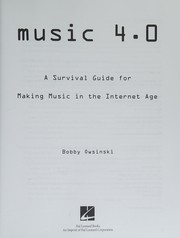 Music 4.0Bobby Owsinski · 2014
 My PinterestMichael Miller · 2012
- 📕My PinterestMichael Miller · 2012
 survival companion for medical students, graduates and interns · 2014
Ranked by number of editions on Open Library, a rough measure of how lasting a book is.
🔗 Related topics
- Like button A like button, like option, or recommend button is a feature in communication software such as social networking services, Internet forums, news websites…
- List of Facebook features Facebook is a social-network service website launched on February 4, 2004, by Mark Zuckerberg. The following is a list of software and technology features…
- Feed (Facebook) Facebook's Feed, formerly known as the News Feed, is a web feed feature of the social networking service. The feed is the primary system through which…
- Facebook Facebook is an American social networking service owned by the American technology conglomerate Meta Platforms. It was founded in 2004 by Mark Zuckerberg…
- History of Facebook The history of Facebook traces its growth from a college networking site to a global social networking service. It was launched as TheFacebook in 2004…
- Facebook Graph Search Facebook Graph Search was a semantic search engine that Facebook introduced in March 2013. It was designed to give answers to user natural language queries…
- Facebook F8 Facebook F8 was a mostly-annual conference held by Meta Platforms (formerly Facebook) from 2007 to 2021, intended for developers and entrepreneurs who…
- Criticism of Facebook Facebook (and parent company Meta Platforms) has been the subject of criticism and legal action since it was founded in 2004. Criticisms include the outsize…