Live briefing

Everything about Extract, transform, load
Procedure in computing
Extract, transform, load (ETL) is a three-phase computing process where data are extracted from an input source, transformed, and loaded into an output data container. The data can be collected from one or more sources and it can also be output to one or more destinations. ETL processing is typically executed using software applications but it can also be done manually by system operators. ETL software typically automates the entire process and can be run manually or on recurring schedules either as single jobs or aggregated into a batch of jobs. Wikipedia →
🧭 Start here: a 6-step reading path
- Read the overview: Extract, transform, loadA 5-minute orientation
- Skim a recent paper: Extension of correlation coefficient based TOPSIS technique for interval-valued Pythagorean fuzzy soft set: A case study in extract, transform, and load techniquesInfluential work since 2022
- Pick up a classic book: The data warehouse lifecycle toolkitThe most-reprinted book on the subject
- Read the landmark paper: A Survey of Extract–Transform–Load TechnologyCited 229 times
- Go sideways: Data warehouseA closely related topic
- Go sideways: SQL Server Integration ServicesA closely related topic
📖 Definitions
No dictionary entry for this exact phrase.
🗂️ The subject at a glance
🏆 Landmark papers (most cited)
A Survey of Extract–Transform–Load Technology
Integrating Big Data: A Semantic Extract-Transform-Load Framework
Validating the extract, transform, load process used to populate a large clinical research database
SETL: A programmable semantic extract-transform-load framework for semantic data warehouses
Extract, transform, load framework for the conversion of health databases to OMOP
SAT-ETL-Integrator: an extract-transform-load software for satellite big data ingestion
Extract-Transform-Load for Video Streams
Extract Transform Load (ETL) Process in Distributed Database Academic Data Warehouse
🆕 Influential since 2022
Extension of correlation coefficient based TOPSIS technique for interval-valued Pythagorean fuzzy soft set: A case study in extract, transform, and load techniques
ETL (Extract, Transform, Load) Best Practices
Selecting an Extract, Transform, and Load (ETL) Software Solution: A Comprehensive Evaluation and Comparison
Transform waste into profit: Extract licorice residue fiber to load Zr-MOF as a promising adsorbent
Design and implementation of the web (extract, transform, load) process in data warehouse application
📚 Books worth reading
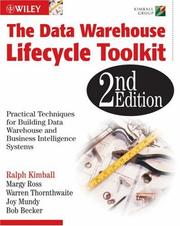 The data warehouse lifecycle toolkitRalph Kimball, Margy Ross · 2008
 The history of Detroit and MichiganSilas Farmer · 1884
 Treaty Occupationay ToxicologySuelen Queiroz · 2010
 The Conspirators HierarchyJohn Coleman · 1992
 Emerging Technologies for Information Systems, Computing, and ManagementW. Eric Wong · 2013
 Conceptual ModelingPaolo Atzeni · 2012
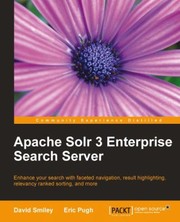 Apache Solr 3 Enterprise Search ServerDavid Smiley · 2011
 ETL - Extract, Transform, LoadDr. Jim Ras · 2018
Ranked by number of editions on Open Library, a rough measure of how lasting a book is.
🔗 Related topics
- Data warehouse In computing, a data warehouse (DW or DWH), also known as an enterprise data warehouse (EDW), is a system used for reporting and data analysis and is a…
- SQL Server Integration Services Microsoft SQL Server Integration Services (SSIS) is a component of the Microsoft SQL Server database software that can be used to perform a broad range…
- Data transformation (computing) In computing, data transformation is the process of converting data from one format or structure into another format or structure. It is a fundamental…
- Early-arriving fact In the data warehouse practice of extract, transform, load (ETL), an early fact or early-arriving fact, also known as late-arriving dimension or late-arriving…
- Spatial ETL Spatial extract, transform, load (spatial ETL), also known as geospatial transformation and load (GTL), is a process for managing and manipulating geospatial…
- Data mapping In computing and data management, data mapping is the process of creating data element mappings between two distinct data models. Data mapping is used…
- Outline of databases The following is provided as an overview of and topical guide to databases: Database – organized collection of data, today typically in digital form. The…
- Data cleansing Data cleansing or data cleaning is the process of identifying and correcting (or removing) corrupt, inaccurate, or irrelevant records from a dataset, table…