Everything about External variable
Variable defined outside any function block in C programming
In the C programming language, and its predecessor B, an external variable is a variable defined outside any function block. On the other hand, a local (automatic) variable is a variable defined inside a function block.As an alternative to automatic variables, it is possible to define variables that are external to all functions, that is, variables that can be accessed by name by any function. Because external variables are globally accessible, they can be used instead of argument lists to communicate data between functions. Furthermore, because external variables remain in existence permanently, rather than appearing and disappearing as functions are called and exited, they retain their values even after the functions that set them have returned. Wikipedia →
🧭 Start here: a 6-step reading path
- Read the overview: External variableA 5-minute orientation
- Skim a recent paper: Variable Time Headway Policy Based Platoon Control for Heterogeneous Connected Vehicles With External DisturbancesInfluential work since 2022
- Pick up a classic book: The C Programming LanguageThe most-reprinted book on the subject
- Read the landmark paper: Internal versus external control of reinforcement: A case history of a variable.Cited 723 times
- Go sideways: Global variableA closely related topic
- Go sideways: Linkage (software)A closely related topic
📖 Definitions
No dictionary entry for this exact phrase.
🏆 Landmark papers (most cited)
Internal versus external control of reinforcement: A case history of a variable.
Review of the Internal-External Control Construct as a Personality Variable
Life stress, depression and anxiety: Internal- external control as a moderator variable
The potential volume of oceanic methane hydrates with variable external conditions
Stability of external circular fixation: a multi-variable biomechanical analysis
Buckling under the external pressure of cylindrical shells with variable thickness
Crystallization of polymers in variable external conditions
Crystallization of polymers in variable external conditions
🆕 Influential since 2022
Variable Time Headway Policy Based Platoon Control for Heterogeneous Connected Vehicles With External Disturbances
Fault Estimation for Switched Interconnected Nonlinear Systems With External Disturbances via Variable Weighted Iterative Learning
Development and external validation of deep learning clinical prediction models using variable-length time series data
On fractional variable-order neural networks with time-varying external inputs
Height control in GMA-AM using external wire as controlling variable
📚 Books worth reading
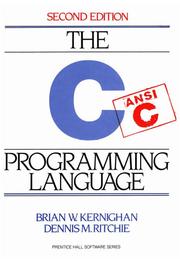 The C Programming LanguageBrian W. Kernighan, Dennis MacAlistair Ritchie · 1978
 Understanding Research MethodsMildred L. Patten · 1996
 The personal MBAJosh Kaufman · 2010
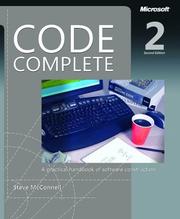 Code CompleteSteve McConnell · 1993
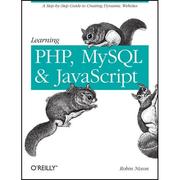 Learning PHP, MySQL & JavaScriptRobin Nixon · 2009
 PHP for the World Wide WebLarry Ullman · 2001
 Introduction to research in the health sciencesStephen Polgar · 1988
 Essentials of fetal monitoringMichelle Murray, Michelle L. Murray · 2006
Ranked by number of editions on Open Library, a rough measure of how lasting a book is.
🔗 Related topics
- Global variable In computer programming, a global variable is a variable with global scope, meaning that it is visible (hence accessible) throughout the program, unless…
- Linkage (software) In programming, linkage describes how names can or can not refer to the same entity throughout the whole program or one single translation unit. The static…
- Compatibility of C and C++ The C and C++ programming languages are closely related but have many significant differences. C++ began as a fork of an early, pre-standardized C, called…
- Static variable In computer programming, a static variable is a variable that has been allocated "statically", meaning that its lifetime (or "extent") is the entire run…
- Inline (C and C++) In the C and C++ programming languages, an inline function is one qualified with the keyword inline; this serves two purposes: It serves as a compiler…
- Declaration (computer programming) In computer programming, a declaration in a syntactic language construct is the process of specifying identifier properties for its initialization: it…
- C syntax C syntax is the form that text must have in order to be C programming language code. The language syntax rules are designed to allow for code that is terse…
- C++ syntax The syntax of C++ is the set of rules defining how a C++ program is written and compiled. C++ syntax is largely inherited from the syntax of its ancestor…