Live briefing
Everything about Extended Graphics Array
IBM graphics card and computer display standard
The eXtended Graphics Array is a graphics card manufactured by IBM and introduced for the IBM PS/2 line of personal computers in 1990 as a successor to the 8514/A. It supports, among other modes, a display resolution of 1024 × 768 pixels with 256 colors at 43.5 Hz (interlaced), or 640 × 480 at 60 Hz (non-interlaced) with up to 65,536 colors. The XGA-2 added an 800 × 600 65,536 color mode and 1024 × 768 60 Hz non-interlaced. Wikipedia →
🧭 Start here: a 6-step reading path
- Read the overview: Extended Graphics ArrayA 5-minute orientation
- Pick up a classic book: American FilmThe most-reprinted book on the subject
- Read the landmark paper: 6.0-Inch Extended Graphics Array Reflective Liquid Crystal Display Using Oxide Semiconductor Thin Film Transistors for Electronic Paper DisplayCited 21 times
- Go sideways: IBM 8514/AA closely related topic
- Go sideways: List of 16-bit computer color palettesA closely related topic
📖 Definitions
No dictionary entry for this exact phrase.
🗂️ The subject at a glance
🏆 Landmark papers (most cited)
6.0-Inch Extended Graphics Array Reflective Liquid Crystal Display Using Oxide Semiconductor Thin Film Transistors for Electronic Paper Display
High-performance uncooled amorphous silicon video graphics array and extended graphics array infrared focal plane arrays with 17-μm pixel pitch
6.0-Inch Extended Graphics Array Reflective Liquid Crystal Display Using Oxide Semiconductor Thin Film Transistors for Electronic Paper Display
Low Power 6.0-inch Extended Graphics Array Transmissive Liquid Crystal Display using Indium Gallium Zinc Oxide Semiconductor with Variable Frame Frequency
Low Power 6.0-Inch Extended Graphics Array Reflective Liquid Crystal Display using Indium Gallium Zinc Oxide Semiconductor with Electronic Paper Function
📚 Books worth reading
 American FilmAmerican Film Institute · 1975
 Java software solutionsLewis, John, John E. Lewis Ph. D. · 1997
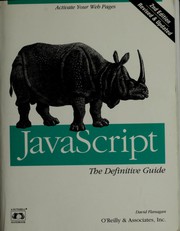 JavaScriptDavid Flanagan · 1996
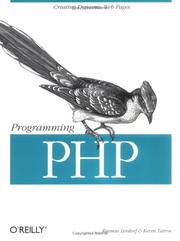 Programming PHPRasmus Lerdorf, Kevin Tatroe · 2002
 AutoCAD and its applicationsTerence M. Shumaker · 1993
 An introduction to data structures with applicationsJean-Paul Tremblay, Paul Gordon Sorenson · 1976
Ranked by number of editions on Open Library, a rough measure of how lasting a book is.
🔗 Related topics
- IBM 8514/A The IBM 8514/A is a graphics card manufactured by IBM and introduced with the IBM PS/2 line of personal computers in 1987. It supports a display resolution…
- List of 16-bit computer color palettes This is a list of notable RGB hardware color palettes used on 16-bit computers, which were primarily manufactured from 1985 to 1995. Due to mixed-bit architectu…
- Video Graphics Array Video Graphics Array (VGA) is a video display controller and accompanying de facto graphics standard, first introduced with the IBM PS/2 line of computers…
- IBM PS/2 The Personal System/2 or PS/2 is IBM's second generation of personal computers. Released in 1987, it officially replaced the IBM PC, XT, AT, and PC Convertible…
- X68000 The X68000 (Japanese: エックス ろくまんはっせん, Hepburn: Ekkusu Rokuman Hassen) is a home computer created by Sharp Corporation. It was first released in 1987 and…
- S3 ViRGE The S3 ViRGE (Video and Rendering Graphics Engine) graphics chipset was one of the first 2D/3D accelerators designed for the mass market. Introduced in…
- Amiga Advanced Graphics Architecture Amiga Advanced Graphics Architecture (AGA) is the third-generation Amiga graphic chipset, first used in the Amiga 4000 in 1992. Before release AGA was…
- Multi-Color Graphics Array The Multi-Color Graphics Array or MCGA is a video subsystem built into the motherboard of the IBM PS/2 Model 30, introduced in April 1987, and Model 25…