Everything about Extended Boolean model
The Extended Boolean model was described in a Communications of the ACM article appearing in 1983, by Gerard Salton, Edward A. Fox, and Harry Wu. The goal of the Extended Boolean model is to overcome the drawbacks of the Boolean model that has been used in information retrieval. The Boolean model doesn't consider term weights in queries, and the result set of a Boolean query is often either too small or too big. The idea of the extended model is to make use of partial matching and term weights as in the vector space model. It combines the characteristics of the Vector Space Model with the properties of Boolean algebra and ranks the similarity between queries and documents. This way a document may be somewhat relevant if it matches some of the queried terms and will be returned as a result, whereas in the Standard Boolean model it wasn't. Wikipedia →
🧭 Start here: a 6-step reading path
- Read the overview: Extended Boolean modelA 5-minute orientation
- Skim a recent paper: A bounded stochastic extended Boolean model for signal amplification, noise propagation, and feedback oscillation in cell signaling pathwaysInfluential work since 2022
- Pick up a classic book: JavaScriptThe most-reprinted book on the subject
- Read the landmark paper: Extended Boolean query processing in the generalized vector space modelCited 15 times
- Go sideways: Fuzzy retrievalA closely related topic
- Go sideways: Vector space modelA closely related topic
📖 Definitions
No dictionary entry for this exact phrase.
🏆 Landmark papers (most cited)
Extended Boolean query processing in the generalized vector space model
Mathematical model of the cell signaling pathway based on the extended Boolean network model with a stochastic process
An extended gene protein/products boolean network model including post-transcriptional regulation
IECS: Intent-Enforced Code Search via Extended Boolean Model
Adaptive relevance feedback method of extended Boolean model using hierarchical clustering techniques
An Extended, Boolean Model of the Septation Initiation Network in S.Pombe Provides Insights into Its Regulation
Enhanced Information Retrieval Using Hybrid p-Norm Extended Boolean Models with BERT
Extended Model of LP-inference on Boolean Lattice
🆕 Influential since 2022
📚 Books worth reading
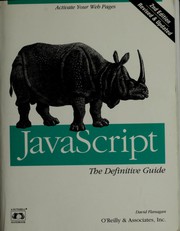 JavaScriptDavid Flanagan · 1996
 Language and Automata Theory and ApplicationsAdrian-Horia Dediu · 2012
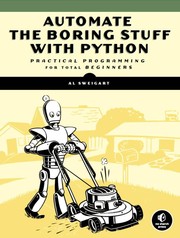 Automate the Boring Stuff with PythonAl Sweigart · 2015
 Introduction to automata theory, languages, and computationJohn E. Hopcroft, Jeffrey D. Ullman · 1979
 Introduction to Computing Using PythonLjubomir Perkovic · 2011
 Introduction to information retrievalChristopher D. Manning, Prabhakar Raghavan · 2008
 Intelligent Information and Database SystemsAli Selamat · 2013
 Theory of computationDerick Wood · 1987
Ranked by number of editions on Open Library, a rough measure of how lasting a book is.
🔗 Related topics
- Fuzzy retrieval Fuzzy retrieval techniques are based on the Extended Boolean model and the Fuzzy set theory. There are two classical fuzzy retrieval models: Mixed Min…
- Vector space model Vector space model (VSM) or term vector model is an algebraic model for representing text documents (or more generally, items) as vectors such that the…
- Ranking (information retrieval) Ranking of query is one of the fundamental problems in information retrieval (IR), the scientific/engineering discipline behind search engines. Given a…
- Binary independence model In computing and information science, the binary independence model (BIM) is a probabilistic information retrieval technique. The model makes some simple…
- Latent semantic analysis Latent semantic analysis (LSA) is a technique in natural language processing, in particular distributional semantics, of analyzing relationships between…
- Information retrieval In computing and information science, information retrieval (IR) is the task of identifying and retrieving information system resources that are relevant…
- Boolean model of information retrieval The (standard) Boolean model of information retrieval (BIR) is a classical information retrieval (IR) model where documents are retrieved based on whether…
- Explicit semantic analysis In natural language processing and information retrieval, explicit semantic analysis (ESA) is a vectoral representation of text (individual words or entire…