Live briefing
Everything about Express Data Path
High performance packet data path in the OS kernel
XDP is an eBPF-based high-performance network data path used to send and receive network packets at high rates by bypassing most of the operating system networking stack. It is merged in the Linux kernel since version 4.8. This implementation is licensed under GPL. Large technology firms including Amazon, Google and Intel support its development. Microsoft released their free and open source implementation XDP for Windows in May 2022. It is licensed under MIT License. Wikipedia →
🧭 Start here: a 6-step reading path
- Read the overview: Express Data PathA 5-minute orientation
- Pick up a classic book: Learning PythonThe most-reprinted book on the subject
- Read the landmark paper: Accelerating Virtual Network Functions With Fast-Slow Path Architecture Using eXpress Data PathCited 22 times
- Go sideways: EBPFA closely related topic
- Go sideways: Berkeley Packet FilterA closely related topic
🏆 Landmark papers (most cited)
Accelerating Virtual Network Functions With Fast-Slow Path Architecture Using eXpress Data Path
Takeaways from an experimental evaluation of eXpress Data Path (XDP) and Data Plane Development Kit (DPDK) under a Cloud Computing environment
A novel approach for FPGA-to-server data transmission over an Ethernet-based network using the eXpress Data Path technology
DDoS Mitigation in Kubernetes: A Review of ExtendedBerkeley Packet Filtering and eXpress Data Path Technologies
XAForward: Accelerating Distributed Large-Scale Language Model Training Through Fast eXpress Data Path
📚 Books worth reading
 Learning PythonMark Lutz, David Ascher · 1999
 Clean CodeRobert C. Martin · 2008
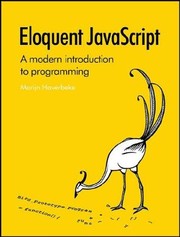 Eloquent JavascriptMarijn Haverbeke · 2009
 Beginning programming with C++ for dummiesStephen R. Davis, Stephen R. Davis · 2010
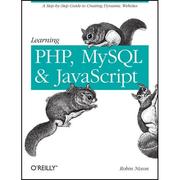 Learning PHP, MySQL & JavaScriptRobin Nixon · 2009
 Regular Expressions CookbookJan Goyvaerts, Steven Levithan · 2009
 Automate the Boring Stuff with PythonAl Sweigart · 2015
 An introduction to computer scienceJean-Paul Tremblay, Richard B. Bunt · 1979
Ranked by number of editions on Open Library, a rough measure of how lasting a book is.
🔗 Related topics
- EBPF eBPF is a technology that can run programs in a privileged context such as the operating system kernel. It is the successor to the Berkeley Packet Filter…
- Berkeley Packet Filter The Berkeley Packet Filter (BPF; also BSD Packet Filter, classic BPF or cBPF) is a network tap mechanism and packet filter which permits computer network…
- Cilium (computing) Cilium is a cloud native technology for networking, observability, and security. It is based on the kernel technology eBPF, originally for better networking…
- Multi-core network packet steering Network packet steering of transmitted and received traffic for multi-core architectures (multi-core network packet steering) is needed in modern network…
- Network scheduler A network scheduler, also called packet scheduler, queueing discipline (qdisc) or queueing algorithm, is an arbiter on a node in a packet switching communicatio…
- MsQuic MsQuic is a free and open source implementation of the IETF QUIC protocol written in C that is officially supported on the Microsoft Windows (including…
- QUIC QUIC (/kwɪk/) is a general-purpose transport layer network protocol initially designed by Jim Roskind at Google. It was first implemented and deployed…
- Network interface controller A network interface controller (NIC, also known as a network interface card, network adapter, LAN adapter and physical network interface) is a computer…