Live briefing
Everything about Exponential time hypothesis
Unproven computational hardness assumption
In computational complexity theory, the exponential time hypothesis (ETH) states that satisfiability of 3-CNF Boolean formulas (3-SAT) cannot be solved in subexponential time,. More precisely, the usual form of the hypothesis asserts the existence of a number such that all algorithms that correctly solve 3-SAT require time at least ETH is a computational hardness assumption proposed by Russell Impagliazzo and Ramamohan Paturi in 1999 and elaborated on, with Francis Zane, in 2001. Wikipedia →
🧭 Start here: a 6-step reading path
- Read the overview: Exponential time hypothesisA 5-minute orientation
- Skim a recent paper: On Exponential-time Hypotheses, Derandomization, and Circuit Lower BoundsInfluential work since 2022
- Pick up a classic book: Business Analytics, Global EditionThe most-reprinted book on the subject
- Read the landmark paper: Problems on Finite Automata and the Exponential Time HypothesisCited 24 times
- Go sideways: Time complexityA closely related topic
- Go sideways: Fine grained complexityA closely related topic
📖 Definitions
No dictionary entry for this exact phrase.
🗂️ The subject at a glance
🏆 Landmark papers (most cited)
Problems on Finite Automata and the Exponential Time Hypothesis
From Gap-Exponential Time Hypothesis to Fixed Parameter Tractable Inapproximability: Clique, Dominating Set, and More
A Framework for Exponential-Time-Hypothesis--Tight Algorithms and Lower Bounds in Geometric Intersection Graphs
Tight lower bounds for the Workflow Satisfiability Problem based on the Strong Exponential Time Hypothesis
The exponential-time hypothesis and the relative complexity of optimization and logical reasoning problems
Improving resolution width lower bounds for k -CNFs with applications to the Strong Exponential Time Hypothesis
Refining complexity analyses in planning by exploiting the exponential time hypothesis
Parameterized Complexity of Weighted Local Hamiltonian Problems and the Quantum Exponential Time Hypothesis
🆕 Influential since 2022
📚 Books worth reading
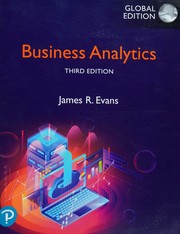 Business Analytics, Global EditionEvans, James R. · 1920
 Flare StarDwardu Cardona · 2007
 Meaningful MathDan Fendel, Diane Resek · 2015
 Meaninful MathDan Fendel, Diane Resek · 2015
- 📕JMP Means BusinessJosef Schmee · 2010
 Probability, statistics, and stochastic processesPeter Olofsson · 2012
- 📕Mastering Technical AnalysisAlan Northcott · 2014
 Object-oriented design measurementScott A. Whitmire · 1997
Ranked by number of editions on Open Library, a rough measure of how lasting a book is.
🔗 Related topics
- Time complexity In theoretical computer science, the time complexity is the computational complexity that describes the amount of computer time it takes to run an algorithm…
- Fine grained complexity Fine-grained complexity is a subfield of computational complexity theory that studies the time required to solve computational problems, especially those…
- Boolean satisfiability problem In logic and computer science, the Boolean satisfiability problem (sometimes called propositional satisfiability problem and abbreviated SATISFIABILITY…
- Russell Impagliazzo Russell Graham Impagliazzo is a professor of computer science at the University of California, San Diego, specializing in computational complexity theory…
- Parameterized complexity In computer science, parameterized complexity is a branch of computational complexity theory that focuses on classifying computational problems according…
- 2-satisfiability In computer science, 2-satisfiability, 2-SAT or just 2SAT is a computational problem of assigning values to variables, each of which has two possible values…
- P versus NP problem Unsolved problem in computer science If the solution to a problem can be verified in polynomial time, must the problem be solvable in polynomial time?…
- MAXEkSAT MAXEkSAT is a problem in computational complexity theory that is a maximization version of the Boolean satisfiability problem 3SAT. In MAXEkSAT, each clause…