Everything about Excipient
Non-active ingredient in a medication
An excipient is a substance formulated alongside the active ingredient of a medication. They enhance the active ingredient's therapeutic properties; to facilitate drug absorption, to modify viscosity, to enhance solubility, to improve long-term stabilization. During the manufacturing process, excipients can improve the handling of active substances and facilitate powder flow. The choice of excipients depends on factors such as the intended route of administration, the dosage form, and compatibility with the active ingredient. Wikipedia →
🧭 Start here: a 6-step reading path
- Read the overview: ExcipientA 5-minute orientation
- Skim a recent paper: Sodium Alginate as a Pharmaceutical Excipient: Novel Applications of a Well-known PolymerInfluential work since 2022
- Pick up a classic book: Profiles of Drug Substances, Excipients, and Related MethodologyThe most-reprinted book on the subject
- Read the landmark paper: Chitosan and Its Use as a Pharmaceutical ExcipientCited 1,183 times
- Go sideways: Tablet (pharmacy)A closely related topic
- Go sideways: Capsule (pharmacy)A closely related topic
📖 Definitions
Noun An ingredient that is intentionally added to a drug for purposes other than the therapeutic or diagnostic effect at the intended dosage.
Noun An exceptor.
Adjective Taking an exception.
🗂️ The subject at a glance
🏆 Landmark papers (most cited)
Chitosan and Its Use as a Pharmaceutical Excipient
The safety of chitosan as a pharmaceutical excipient
Protein–excipient interactions: Mechanisms and biophysical characterization applied to protein formulation development
Pharmaceutical assessment of polyvinylpyrrolidone (PVP): As excipient from conventional to controlled delivery systems with a spotlight on COVID-19 inhibition
Activation of complement by therapeutic liposomes and other lipid excipient-based therapeutic products: Prediction and prevention
Reactive Impurities in Excipients: Profiling, Identification and Mitigation of Drug–Excipient Incompatibility
Drug–excipient compatibility screening—Role of thermoanalytical and spectroscopic techniques
In vivo methods for drug absorption – Comparative physiologies, model selection, correlations with in vitro methods (IVIVC), and applications for formulation/API/excipient characterization including food effects
🆕 Influential since 2022
Sodium Alginate as a Pharmaceutical Excipient: Novel Applications of a Well-known Polymer
Long-acting PLGA microspheres: Advances in excipient and product analysis toward improved product understanding
Citric Acid: A Multifunctional Pharmaceutical Excipient
Expanded ROS Generation and Hypoxia Reversal: Excipient‐free Self‐assembled Nanotheranostics for Enhanced Cancer Photodynamic Immunotherapy
Hydroxypropyl Methylcellulose—A Key Excipient in Pharmaceutical Drug Delivery Systems
📚 Books worth reading
 Profiles of Drug Substances, Excipients, and Related MethodologyHarry G. Brittain · 1992
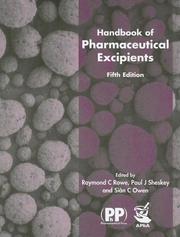 Handbook of pharmaceutical excipientsRaymond C. Rowe, Paul J. Sheskey · 2005
- 📕Polymeric Nanoparticles and MicrospheresP. Guiot · 2018
 Cell-Penetrating PeptidesUlo Langel · 2002
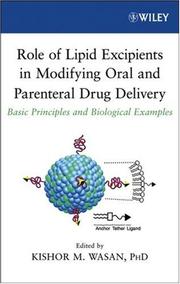 Role of Lipid Excipients in Modifying Oral and Parenteral Drug DeliveryKishor M. Wasan · 2006
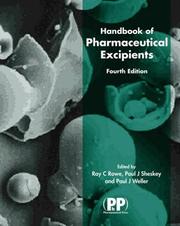 Handbook of Pharmaceutical ExcipientsArthur H. Kibbe · 2000
 Handbook of Cosmeceutical Excipients and their SafetiesK Y Heng, T Y Kei · 2014
 Polyvinylpyrrolidone Excipients for PharmaceuticalsVolker Bühler · 2005
Ranked by number of editions on Open Library, a rough measure of how lasting a book is.
🔗 Related topics
- Tablet (pharmacy) A tablet (also known as a pill) is a pharmaceutical oral dosage form (oral solid dosage, or OSD) or solid unit dosage form. Tablets may be defined as the…
- Capsule (pharmacy) In the manufacture of pharmaceuticals, encapsulation refers to a range of dosage forms—techniques used to enclose medicines—in a relatively stable shell…
- Pharmaceutical formulation Pharmaceutical formulation, in pharmaceutics, is the process in which the active drug or Active Pharmaceutical Ingredient (API) is combined with different…
- Hypromellose Hypromellose (INN), short for hydroxypropyl methylcellulose or hydroxypropylmethylcellulose (HPMC), is a semisynthetic, inert, viscoelastic polymer used…
- Polyvinylpyrrolidone Polyvinylpyrrolidone (PVP), also commonly called povidone, is a water-soluble polymer compound made from the monomer N-vinylpyrrolidone. PVP is available…
- Colloidal silica Colloidal silicas are suspensions of fine amorphous, nonporous, and typically spherical silica particles in a liquid phase. It may be produced by Stöber…
- Cellulose acetate phthalate Cellulose acetate phthalate (CAP), also known as cellacefate (INN) and cellulosi acetas phthalas, is a commonly used polymer phthalate in the formulation…
- Hydroxyethyl cellulose Hydroxyethyl cellulose (or hydroxyethylcellulose) is a gelling and thickening agent derived from cellulose. It is widely used in cosmetics, cleaning solutions…