Everything about Evolution
Change in the heritable characteristics of populations

Evolution is the change in the heritable characteristics of biological populations over successive generations. It happens when individuals in a population vary in their genetic characteristics and in the numbers of their surviving offspring. Mutation introduces new genetic variation, and processes such as genetic drift, gene flow, and natural selection result in some genetic variants becoming more or less common over time. Evolution is often defined as a change in the frequency of alleles in a population. Wikipedia →
🧭 Start here: a 6-step reading path
- Read the overview: EvolutionA 5-minute orientation
- Skim a recent paper: The evolution of SARS-CoV-2Influential work since 2022
- Pick up a classic book: On the origin of species by means of natural selectionThe most-reprinted book on the subject
- Read the landmark paper: Differential Evolution – A Simple and Efficient Heuristic for global Optimization over Continuous SpacesCited 25,931 times
- Go sideways: Natural selectionA closely related topic
- Go sideways: SpeciationA closely related topic
📖 Definitions
Noun A change of position. A manoeuvre of troops or ships. A turning movement, especially of the body. A turned or twisted shape; an involution, a complex or intricate shape.
Noun A manoeuvre of troops or ships.
Noun A turning movement, especially of the body.
Noun A turned or twisted shape; an involution, a complex or intricate shape.
🏆 Landmark papers (most cited)
Differential Evolution – A Simple and Efficient Heuristic for global Optimization over Continuous Spaces
Bacterial evolution
APE: Analyses of Phylogenetics and Evolution in R language
The genetical evolution of social behaviour. I
Systematic Evolution of Ligands by Exponential Enrichment: RNA Ligands to Bacteriophage T4 DNA Polymerase
Evolution and ecology of influenza A viruses
Generalized linear mixed models: a practical guide for ecology and evolution
The Luminosity Function and Stellar Evolution.
🆕 Influential since 2022
The evolution of SARS-CoV-2
Non-iridium-based electrocatalyst for durable acidic oxygen evolution reaction in proton exchange membrane water electrolysis
Unraveling the dual defect sites in graphite carbon nitride for ultra-high photocatalytic H 2 O 2 evolution
Insight into biomass pyrolysis mechanism based on cellulose, hemicellulose, and lignin: Evolution of volatiles and kinetics, elucidation of reaction pathways, and characterization of gas, biochar and bio‐oil
Simulating 500 million years of evolution with a language model
📚 Books worth reading
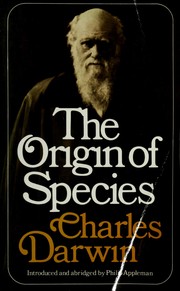 On the origin of species by means of natural selectionCharles Darwin · 1859
 Guns, Germs, and SteelJared Diamond · 1997
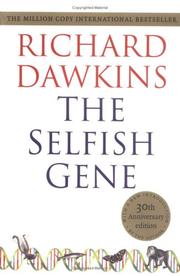 The Selfish GeneRichard Dawkins · 1976
 Life on EarthDavid Attenborough · 1705
 The God DelusionRichard Dawkins · 2001
 The Blind WatchmakerRichard Dawkins · 1986
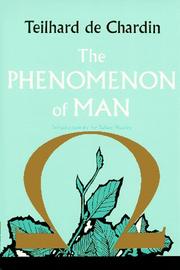 The Phenomenon of ManPierre Teilhard de Chardin, Pierre Teilhard de Chardin · 1955
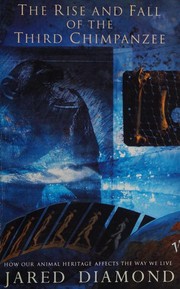 The Third ChimpanzeeJared Diamond · 1991
Ranked by number of editions on Open Library, a rough measure of how lasting a book is.
🔗 Related topics
- Natural selection Natural selection is the differential survival and reproduction of individuals due to differences in the relative fitness endowed on them by their own…
- Speciation Speciation is the evolutionary process by which populations evolve to become distinct species. The biologist Orator F. Cook coined the term in 1906 for…
- Microevolution Microevolution is the change in allele frequencies that occurs over time within a population. This change is due to four different processes: mutation…
- Population genetics Population genetics is a subfield of genetics that deals with genetic differences within and among populations, and is a part of evolutionary biology.…
- Introduction to evolution In biology, evolution is the process of change in all forms of life over generations, and evolutionary biology is the study of how evolution occurs. Biological…
- Directional selection In population genetics, directional selection is a mode of natural selection in which individuals with a trait (for example, beak size) at one extreme…
- Evolutionary biology Evolutionary biology is a subfield of biology that analyzes the four mechanisms of evolution: natural selection, mutation, genetic drift, and gene flow…
- Heredity Heredity, also called inheritance or biological inheritance, is the passing on of genetic information from parents to their offspring. It may occur through…