Live briefing
Everything about Event tree analysis
Logical modeling technique
Event tree analysis (ETA) is a forward, top-down, logical modeling technique for both success and failure that explores responses through a single initiating event and lays a path for assessing probabilities of the outcomes and overall system analysis. This analysis technique is used to analyze the effects of functioning or failed systems given that an event has occurred. Wikipedia →
🧭 Start here: a 6-step reading path
- Read the overview: Event tree analysisA 5-minute orientation
- Skim a recent paper: Novel method of dynamic event tree keeping the number of simulations in risk analysis smallInfluential work since 2022
- Pick up a classic book: The PrinceThe most-reprinted book on the subject
- Read the landmark paper: Event-tree analysis using binary decision diagramsCited 194 times
- Go sideways: Fault tree analysisA closely related topic
- Go sideways: Safety engineeringA closely related topic
📖 Definitions
No dictionary entry for this exact phrase.
🗂️ The subject at a glance
🏆 Landmark papers (most cited)
Event-tree analysis using binary decision diagrams
Safety barriers analysis of offshore drilling system by employing Fuzzy Event Tree Analysis
A fuzzy set approach for event tree analysis
Handling data uncertainties in event tree analysis
Event-tree analysis by fuzzy probability
Modeling time‐to‐event (survival) data using classification tree analysis
Event Tree Analysis of Marine Accidents in Bangladesh
Matrix Theory Formalism for Event Tree Analysis: Application to Nuclear‐Risk Analysis
🆕 Influential since 2022
Novel method of dynamic event tree keeping the number of simulations in risk analysis small
Event Tree Reliability Analysis of Safety-Critical Systems Using Theorem Proving
Risk analysis virtual ENvironment for dynamic event tree-based analyses
Conventional Event Tree Analysis on Emergency Release of Liquefied Natural Gas
Dynamic Event Tree Analysis as a Tool for Risk Assessment in Nuclear Fusion Plants Using RAVEN and MELCOR
📚 Books worth reading
 The PrinceNiccolò Machiavelli · 1515
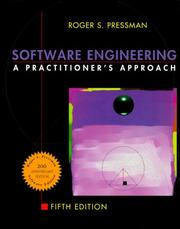 Software EngineeringRoger S. Pressman, Bruce Maxim · 1982
 Artificial intelligenceStuart J. Russell, Peter Norvig · 1994
 Computational Linguistics and Intelligent Text ProcessingAlexander Gelbukh · 2003
 Chemical Process SafetyDaniel A. Crowl, Joseph F. Louvar · 1989
 Introduction to operations researchFrederick S. Hillier · 1967
 Operations ManagementRoberta S. Russell, Bernard Taylor · 1998
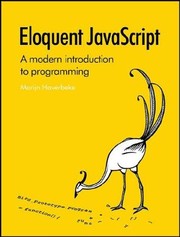 Eloquent JavascriptMarijn Haverbeke · 2009
Ranked by number of editions on Open Library, a rough measure of how lasting a book is.
🔗 Related topics
- Fault tree analysis Fault tree analysis (FTA) is a type of failure analysis in which an undesired state of a system is examined. This analysis method is mainly used in safety…
- Safety engineering Safety engineering is an engineering discipline which assures that engineered systems provide acceptable levels of safety. It is strongly related to industrial…
- Bow-tie diagram A bow-tie diagram is a graphic tool used to describe a possible damage process in terms of the mechanisms that may initiate an event in which energy is…
- ARP4761 ARP4761, Guidelines for Conducting the Safety Assessment Process on Civil Aircraft, Systems, and Equipment is an Aerospace Recommended Practice from SAE…
- Technique for human error-rate prediction The Technique for human error-rate prediction (THERP) is a technique that is used in the field of Human Reliability Assessment (HRA) to evaluate the probability…
- SAPHIRE SAPHIRE is a probabilistic risk and reliability assessment software tool. SAPHIRE stands for Systems Analysis Programs for Hands-on Integrated Reliability…
- Hazard analysis A hazard analysis is one of many methods that may be used to assess risk. At its core, the method entails describing a system object (such as a person…
- Reliability block diagram A reliability block diagram (RBD) is a diagrammatic method for showing how component reliability contributes to the success or failure of a redundant system…