Everything about Event (computing)
Computing state associated with a point in time
In computing, an event is a detectable occurrence or change in state that the system is designed to monitor, such as user input, hardware interrupt, system notification, or change in data or conditions. When associated with an event handler, an event triggers a response. The handler may run synchronously, where the execution thread is blocked until the event handler completes its processing, or asynchronously, where the event may be processed later. Even when synchronous handling appears to block execution, the underlying mechanism in many systems is still asynchronous, managed by the event loop. Wikipedia →
🧭 Start here: a 6-step reading path
- Read the overview: Event (computing)A 5-minute orientation
- Skim a recent paper: Event-Driven Computation Offloading in IoT With Edge ComputingInfluential work since 2022
- Pick up a classic book: Steve JobsThe most-reprinted book on the subject
- Read the landmark paper: Computing efforts allocation for ordinal optimization and discrete event simulationCited 83 times
- Go sideways: Event-driven programmingA closely related topic
- Go sideways: Event loopA closely related topic
📖 Definitions
No dictionary entry for this exact phrase.
🗂️ The subject at a glance
🏆 Landmark papers (most cited)
Computing efforts allocation for ordinal optimization and discrete event simulation
Event detection and localization for small mobile robots using reservoir computing
WComp middleware for ubiquitous computing: Aspects and composite event-based Web services
Computing return times or return periods with rare event algorithms
Human-Centric Cyber Social Computing Model for Hot-Event Detection and Propagation
Quantifying event correlations for proactive failure management in networked computing systems
Security event correlation approach for cloud computing
Neuromorphic Near-Sensor Computing: From Event-Based Sensing to Edge Learning
🆕 Influential since 2022
Event-Driven Computation Offloading in IoT With Edge Computing
HearCough: Enabling continuous cough event detection on edge computing hearables
Application of Event Cameras and Neuromorphic Computing to VSLAM: A Survey
SPRIGHT: High-Performance eBPF-Based Event-Driven, Shared-Memory Processing for Serverless Computing
HyperSpikeASIC: Accelerating Event-Based Workloads With HyperDimensional Computing and Spiking Neural Networks
📚 Books worth reading
 Steve JobsWalter Isaacson · 2011
 Event History Analysis with StataHans-Peter Blossfeld, Gtz Rohwer · 2007
- 📕Event History Analysis with RGöran Broström, Göran Broström · 2011
 Get a Life, Chloe BrownTalia Hibbert, Adjoa Andoh · 2019
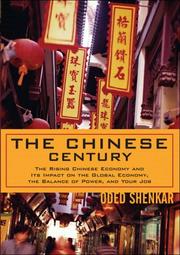 The Chinese CenturyOded Shenkar · 2004
 Digital citizenshipKaren Mossberger, Caroline J. Tolbert · 2007
 Flashbulb memoriesOlivier Luminet · 2008
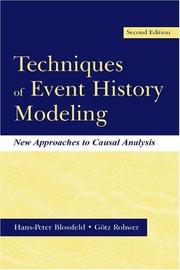 Techniques of Event History ModelingHans-Peter Blossfeld, Gtz Rohwer · 2001
Ranked by number of editions on Open Library, a rough measure of how lasting a book is.
🔗 Related topics
- Event-driven programming In computer programming, event-driven programming is a programming paradigm in which the flow of the program is determined by external events. User interface…
- Event loop In software, an event loop is an algorithm that continually dispatches control flow for events. The loop requests the next event from an event provider…
- Asynchronous I/O Asynchronous I/O is a form of input/output processing that allows a program to initiate an I/O operation and continue processing other tasks before the…
- Reactor pattern The reactor software design pattern is an event handling strategy that can respond to many potential service requests concurrently. The pattern's key component…
- Message A message is a unit of communication that conveys information from a sender to a receiver. It can be transmitted through various forms, such as spoken…
- Event dispatching thread The event dispatching thread (EDT) is a background thread used in Java to process events from the Abstract Window Toolkit (AWT) graphical user interface…
- Async/await In computer programming, the async/await pattern is a syntactic feature of many programming languages that allows an asynchronous, non-blocking function…
- Message queue In computer science, message queues and mailboxes are software-engineering components typically used for inter-process communication (IPC), or for inter-thread…