Live briefing

Everything about Emulator
System allowing a device to imitate another
In computing, an emulator is hardware or software that enables one computer system to behave like another computer system. An emulator typically enables the host system to run software or use peripheral devices designed for the guest system. Emulation refers to the ability of a computer program in an electronic device to emulate another program or device. Wikipedia →
🧭 Start here: a 6-step reading path
- Read the overview: EmulatorA 5-minute orientation
- Skim a recent paper: Hyper Suprime-Cam Year 3 results: Cosmology from galaxy clustering and weak lensing with HSC and SDSS using the emulator based halo modelInfluential work since 2022
- Pick up a classic book: Embedded programming with AndroidThe most-reprinted book on the subject
- Read the landmark paper: Memristor Emulator for Memristor Circuit ApplicationsCited 363 times
- Go sideways: Instruction set simulatorA closely related topic
- Go sideways: Computer architecture simulatorA closely related topic
📖 Definitions
Noun A person or thing that emulates.
Noun A piece of software or hardware that simulates another system.
🏆 Landmark papers (most cited)
Memristor Emulator for Memristor Circuit Applications
Feynman diagrams versus Fermi-gas Feynman emulator
Waveform Inspired Models and the Harmonic Balance Emulator
THE COYOTE UNIVERSE. III. SIMULATION SUITE AND PRECISION EMULATOR FOR THE NONLINEAR MATTER POWER SPECTRUM
A universal emulator for memristor, memcapacitor, and meminductor and its chaotic circuit
A new DDCC based memristor emulator circuit and its applications
Virtual Inertia Emulator-Based Model Predictive Control for Grid Frequency Regulation Considering High Penetration of Inverter-Based Energy Storage System
Optimized Wind Energy Harvesting System Using Resistance Emulator and Active Rectifier for Wireless Sensor Nodes
🆕 Influential since 2022
Hyper Suprime-Cam Year 3 results: Cosmology from galaxy clustering and weak lensing with HSC and SDSS using the emulator based halo model
Full-shape cosmology analysis of the SDSS-III BOSS galaxy power spectrum using an emulator-based halo model: A 5% determination of σ8
Nuclear Equation of State for Arbitrary Proton Fraction and Temperature Based on Chiral Effective Field Theory and a Gaussian Process Emulator
Dark energy survey year 3 results: Cosmology with peaks using an emulator approach
Stringent σ8 constraints from small-scale galaxy clustering using a hybrid MCMC + emulator framework
📚 Books worth reading
- 📕Embedded programming with AndroidRoger Ye · 2015
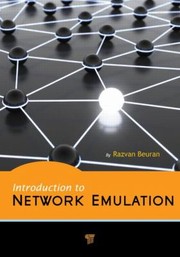 Introduction To Network EmulationRazvan Beuran · 2012
- 📕Untersuchungen zur Kostenoptimierung für Hardware-Emulatoren durch Anwendung von Methoden der partiellen LaufzeitrekonfigurationRené Beckert · 2008
- 📕La Reliure · 1991
 Emulation Working TodayGraham Redman · 2007
- 📕EMU-TEK, 4200 plus · 1990
- 📕The design, analysis and modeling of the Daisy reaction wheel systemRaymond Chung-Ying Hui · 1986
 Principles of multiple concurrent computer emulationJohn Charles Demco · 1975
Ranked by number of editions on Open Library, a rough measure of how lasting a book is.
🔗 Related topics
- Instruction set simulator An instruction set simulator (ISS) is a simulation model, usually coded in a high-level programming language, which mimics the behavior of a mainframe…
- Computer architecture simulator A computer architecture simulator is a program that simulates the execution of computer architecture. Computer architecture simulators are used for the…
- Virtualization In computing, virtualization (or virtualisation in Commonwealth English; see spelling differences) abbreviated as v12n, is a series of technologies that…
- PDP-10 Digital Equipment Corporation (DEC)'s PDP-10, later marketed as the DECsystem-10, is a mainframe computer family manufactured from 1966, delivered from…
- MikroSim MikroSim is an educational computer program for hardware-non-specific explanation of the general functioning and behaviour of a virtual processor running…
- Operating system An operating system (OS) is system software that manages computer hardware and software resources, and provides common services for computer programs.…
- Microcode In computer architecture, microcode is a layer of low-level control data or instructions used to implement a processor's instruction set architecture or…
- Interrupt In digital computers, an interrupt is a request for the processor to interrupt currently executing code (when permitted), so that the event can be processed…