Live briefing

Everything about Electrical network
Assemblage of connected electrical elements
An electrical network is an interconnection of electrical components or a model of such an interconnection, consisting of electrical elements. An electrical circuit is a network consisting of a closed loop, giving a return path for the current. Thus all circuits are networks, but not all networks are circuits. Wikipedia →
🧭 Start here: a 6-step reading path
- Read the overview: Electrical networkA 5-minute orientation
- Skim a recent paper: Hydrogen bond network connectivity in the electric double layer dominates the kinetic pH effect in hydrogen electrocatalysis on PtInfluential work since 2022
- Pick up a classic book: Pinterest For DummiesThe most-reprinted book on the subject
- Read the landmark paper: The resistance of an electrical networkCited 41 times
- Go sideways: Kirchhoff's circuit lawsA closely related topic
- Go sideways: Electrical elementA closely related topic
📖 Definitions
No dictionary entry for this exact phrase.
🗂️ The subject at a glance
🏆 Landmark papers (most cited)
The resistance of an electrical network
Electrical properties of m × n cylindrical network*
Electrical network-based time-dependent model of electrical breakdown in water
Scalable network electrical devices using ZnO nanowalls
PDAEs in Refined Electrical Network Modeling
Neural electrical activity and neural network growth
Matroid Inequalities from Electrical Network Theory
Electrical stimulation and visual network plasticity
🆕 Influential since 2022
Hydrogen bond network connectivity in the electric double layer dominates the kinetic pH effect in hydrogen electrocatalysis on Pt
Topological supramolecular network enabled high-conductivity, stretchable organic bioelectronics
Optimal location of electric vehicle charging station and its impact on distribution network: A review
Electrical-STGCN: An Electrical Spatio-Temporal Graph Convolutional Network for Intelligent Predictive Maintenance
Aboveground plant-to-plant electrical signaling mediates network acquired acclimation
📚 Books worth reading
 Pinterest For DummiesKelby Carr · 2012
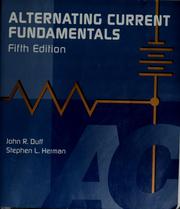 Alternating current fundamentalsJohn R. Duff, Stephen L. Herman · 1961
 Engineering circuit analysisWilliam H. Hayt · 1979
 Basic circuit theoryLawrence P. Huelsman · 1972
 Network analysisM. E. Van Valkenburg · 1955
 Signals and linear systemsRobert A. Gabel · 1970
 Lines, waves, and antennasRobert Grover Brown, Robert A. Sharpe · 1961
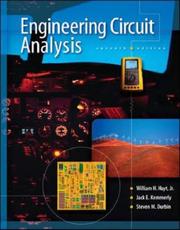 Engineering circuit analysisWilliam Hart Hayt · 1962
Ranked by number of editions on Open Library, a rough measure of how lasting a book is.
🔗 Related topics
- Kirchhoff's circuit laws Kirchhoff's circuit laws are two equalities that deal with the current and potential difference (commonly known as voltage) in the lumped element model…
- Electrical element In electrical engineering, electrical elements are conceptual abstractions representing idealized electrical components, such as resistors, capacitors…
- Electronic filter Electronic filters are a type of signal processing filter in the form of electrical circuits. This article covers those filters consisting of lumped electronic…
- Impedance analogy The impedance analogy is a method of representing a mechanical system by an analogous electrical system. The advantage of doing this is that there is a…
- Passivity (engineering) Passivity is a property of engineering systems, most commonly encountered in analog electronics and control systems. Typically, analog designers use passivity…
- Network analysis (electrical circuits) In electrical engineering and electronics, a network is a collection of interconnected components. Network analysis is the process of finding the voltages…
- Mechanical–electrical analogies Mechanical–electrical analogies are the representation of mechanical systems as electrical networks. At first, such analogies were used in reverse to help…
- Mathematical methods in electronics Mathematical methods are integral to the study of electronics. Mathematical methods in electronics engineering involves applying mathematical principles…