Live briefing
Everything about Divided differences
Algorithm for computing polynomial coefficients
In mathematics, divided differences is an algorithm, historically used for computing tables of logarithms and trigonometric functions. Charles Babbage's difference engine, an early mechanical calculator, was designed to use this algorithm in its operation. Wikipedia →
🧭 Start here: a 6-step reading path
- Read the overview: Divided differencesA 5-minute orientation
- Skim a recent paper: Understanding intergroup conflict: How do children in a divided society perceive group differences?Influential work since 2022
- Pick up a classic book: Globalization, technology diffusion and gender disparityThe most-reprinted book on the subject
- Read the landmark paper: The Divided Central Differences of ZeroCited 29 times
- Go sideways: Newton polynomialA closely related topic
- Go sideways: Berezin integralA closely related topic
📖 Definitions
No dictionary entry for this exact phrase.
🗂️ The subject at a glance
🏆 Landmark papers (most cited)
The Divided Central Differences of Zero
Divided Differences and Combinatorial Identities
Multivariate Divided Differences with Simple Knots
Divided Differences, Falling Factorials, and Discrete Splines
The super-Halley method using divided differences
Divided Differences and Linearly Recursive Sequences
Symbolic computation of divided differences
Naming Differences in Divided Germany
🆕 Influential since 2022
Understanding intergroup conflict: How do children in a divided society perceive group differences?
Second order error bounds for POD-ROM methods based on first order divided differences
General solution of Bateman equations using Cauchy products and the Theory of Divided Differences
Calculating elements of matrix functions using divided differences
First-principles calculation of higher-order elastic constants from divided differences
📚 Books worth reading
- 📕Globalization, technology diffusion and gender disparityTh. van der Weide, Rekha Pande · 2012
 Gender and computersJoel Cooper, Kimberlee D. Weaver · 2003
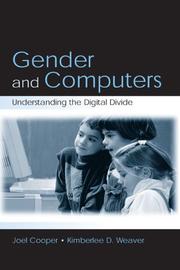 Gender and computersJoel Cooper · 2003
 A treatise on the elements of algebra, by G. Ainsworth and J. YeatsG. Ainsworth, J . Yeats · 1854
Ranked by number of editions on Open Library, a rough measure of how lasting a book is.
🔗 Related topics
- Newton polynomial In the mathematical field of numerical analysis, a Newton polynomial, named after its inventor Isaac Newton, is an interpolation polynomial for a given…
- Berezin integral In mathematical physics, the Berezin integral, named after Felix Berezin (also known as Grassmann integral, after Hermann Grassmann) is a way to define…
- Fractional Laplacian In mathematical analysis, the fractional Laplacian is an operator that generalizes the notion of the Laplace operator to fractional powers of spatial derivative…
- List of formulas in Riemannian geometry This is a list of formulas encountered in Riemannian geometry. Einstein notation is used throughout this article. This article uses the "analyst's" sign…
- Padua points In polynomial interpolation of two variables, the Padua points are the first known example (and up to now the only one) of a unisolvent point set (that…
- Mean-field theory In physics and probability theory, mean-field theory (MFT) or self-consistent field theory studies the behavior of high-dimensional random (stochastic)…
- Energy release rate (fracture mechanics) In fracture mechanics, the energy release rate, G {\displaystyle G} , is the rate at which energy is transformed as a material undergoes fracture. Mathematicall…
- MINQUE In statistics, the theory of minimum norm quadratic unbiased estimation (MINQUE) was developed by C. R. Rao. MINQUE is a theory alongside other estimation…