Live briefing
Everything about Divide-and-conquer algorithm
Algorithms which recursively solve subproblems
In computer science, divide and conquer, originally a political maxim, designates an algorithm design paradigm. A divide-and-conquer algorithm recursively breaks down a problem into two or more sub-problems of the same or related type, until these become simple enough to be solved directly. The solutions to the sub-problems are then combined to give a solution to the original problem. Wikipedia →
🧭 Start here: a 6-step reading path
- Read the overview: Divide-and-conquer algorithmA 5-minute orientation
- Skim a recent paper: Metacell-2: a divide-and-conquer metacell algorithm for scalable scRNA-seq analysisInfluential work since 2022
- Pick up a classic book: Invitation to Computer ScienceThe most-reprinted book on the subject
- Read the landmark paper: A divide-and-conquer algorithm for quantum state preparationCited 169 times
- Go sideways: Cache-oblivious algorithmA closely related topic
- Go sideways: Hybrid algorithmA closely related topic
📖 Definitions
No dictionary entry for this exact phrase.
🗂️ The subject at a glance
🏆 Landmark papers (most cited)
A divide-and-conquer algorithm for quantum state preparation
A Divide-and-Conquer Algorithm for the Bidiagonal SVD
Quartets MaxCut: A Divide and Conquer Quartets Algorithm
Topology-Oriented Divide-and-Conquer Algorithm for Voronoi Diagrams
Divide-and-Conquer Information-Based Optimal Subdata Selection Algorithm
Parallel implementation of a divide and conquer semiempirical algorithm
Computing Puiseux series: a fast divide and conquer algorithm
Divide and conquer algorithm for nondiffracting beams
🆕 Influential since 2022
Metacell-2: a divide-and-conquer metacell algorithm for scalable scRNA-seq analysis
Quantum K‐Nearest Neighbor Classification Algorithm via a Divide‐and‐Conquer Strategy
EDQWS: an enhanced divide and conquer algorithm for workflow scheduling in cloud
Parallel structural learning of Bayesian networks: Iterative divide and conquer algorithm based on structural fusion
A divide-and-conquer algorithm for curve fitting
📚 Books worth reading
 Invitation to Computer ScienceG. Michael Schneider, Judith L. Gersting · 1995
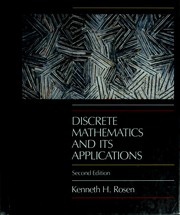 Discrete Mathematics and Its ApplicationsKenneth H. Rosen · 1988
 Mathematical structures for computer scienceJudith L. Gersting · 1982
 Discrete and combinatorial mathematicsRalph P. Grimaldi · 1985
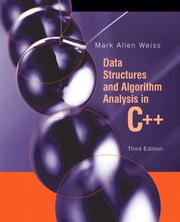 Data structures and algorithm analysis in CMark Allen Weiss · 1993
 Introduction to the design & analysis of algorithmsAnany Levitin · 2008
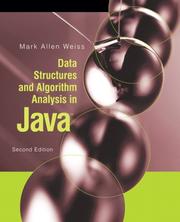 Data structures & algorithm analysis in JavaMark Allen Weiss · 1999
 Parallel Programming in C with MPI and OpenMPMichael J. Quinn · 2003
Ranked by number of editions on Open Library, a rough measure of how lasting a book is.
🔗 Related topics
- Cache-oblivious algorithm In computing, a cache-oblivious algorithm (or cache-transcendent algorithm) is an algorithm designed to take advantage of a processor cache without having…
- Hybrid algorithm In mathematics and computer science, a hybrid algorithm is an algorithm that combines two or more other algorithms that solve the same problem, either…
- Quicksort Quicksort is an efficient, general-purpose sorting algorithm. Quicksort was developed by British computer scientist Tony Hoare in 1959 and published in…
- Recursion (computer science) In computer science, recursion is a method of solving a computational problem where the solution depends on solutions to smaller instances of the same…
- Master theorem (analysis of algorithms) In the analysis of algorithms, the master theorem for divide-and-conquer recurrences provides an asymptotic analysis for many recurrence relations that…
- Merge sort Merge sort (also commonly spelled as mergesort or merge-sort) is an efficient, general-purpose, comparison-based sorting algorithm. Most implementations…
- Sorting algorithm In computer science, a sorting algorithm is an algorithm that puts elements of a list into an order. The most frequently used orders are numerical order…
- Pairwise summation In numerical analysis, pairwise summation, also called cascade summation, is a summation algorithm, i.e. a technique to sum a sequence of finite-precision…