Live briefing
Everything about Distribution learning theory
The distributional learning theory or learning of probability distribution is a framework in computational learning theory. It has been proposed from Michael Kearns, Yishay Mansour, Dana Ron, Ronitt Rubinfeld, Robert Schapire and Linda Sellie in 1994 and it was inspired from the PAC-framework introduced by Leslie Valiant. Wikipedia →
🧭 Start here: a 6-step reading path
- Read the overview: Distribution learning theoryA 5-minute orientation
- Skim a recent paper: Developing Machine Learning Models for Optimal Design of Water Distribution Networks Using Graph Theory-Based FeaturesInfluential work since 2022
- Pick up a classic book: Probability for statistics and machine learningThe most-reprinted book on the subject
- Read the landmark paper: FairReward: Towards Fair Reward Distribution Using Equity Theory in Blockchain-Based Federated LearningCited 14 times
- Go sideways: Johnson–Lindenstrauss lemmaA closely related topic
- Go sideways: Additive noise differential privacy mechanismsA closely related topic
📖 Definitions
No dictionary entry for this exact phrase.
🏆 Landmark papers (most cited)
FairReward: Towards Fair Reward Distribution Using Equity Theory in Blockchain-Based Federated Learning
Feature selection for label distribution learning using Dempster-Shafer evidence theory
Learning Theory of Distribution Regression with Neural Networks
Improved learning theory for kernel distribution regression with two-stage sampling
Some contributions to fixed-distribution learning theory
Deep learning theory of distribution regression with CNNs
Feature selection for label distribution learning using fuzzy evidence theory
A Fixed-Distribution PAC Learning Theory for Neural FIR Models
🆕 Influential since 2022
Developing Machine Learning Models for Optimal Design of Water Distribution Networks Using Graph Theory-Based Features
Topological Information Utilization in Label Enhancement and Label Distribution Learning Based on Optimal Transport Theory
Distribution-informed machine learning for flash flood susceptibility: integrating weibull extreme value theory with interpretable models
A Data-Driven Approach to Predicting Olympic Medal Distribution: Integrating Machine Learning and Graph Theory
An Innovative Method for Detecting Fake News Distribution Sources based on Machine Learning Technology and Graph Theory
📚 Books worth reading
 Probability for statistics and machine learningAnirban DasGupta · 2011
 Spontaneous OrderH. Peyton Young · 2024
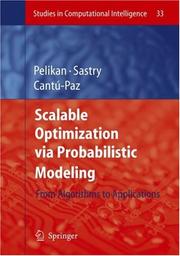 Scalable optimization via probabilistic modelingMartin Pelikan, Kumara Sastry · 2006
 Scalable Optimization via Probabilistic Modeling: From Algorithms to Applications (Studies in Computational Intelligence Book 33)Martin Pelikan, Kumara Sastry · 2007
 Learning and GeneralisationM. Vidyasagar · 2003
 Oracle inequalities in empirical risk minimization and sparse recovery problemsVladimir Koltchinskii · 2011
 Abductive Reasoning and LearningDov M. Gabbay · 2000
 Control TheoryJ. R. Leigh · 2004
Ranked by number of editions on Open Library, a rough measure of how lasting a book is.
🔗 Related topics
- Johnson–Lindenstrauss lemma In mathematics, the Johnson–Lindenstrauss lemma is a result named after William B. Johnson and Joram Lindenstrauss concerning low-distortion embeddings…
- Additive noise differential privacy mechanisms Additive noise differential privacy mechanisms are a class of techniques used to ensure differential privacy when releasing the results of computations…
- Small-bias sample space In theoretical computer science, a small-bias sample space (also known as ϵ {\displaystyle \epsilon } -biased sample space, ϵ {\displaystyle \epsilon }…
- Information dimension In information theory, information dimension is an information measure for random vectors in Euclidean space, based on the normalized entropy of finely…
- Rademacher complexity In computational learning theory (machine learning and theory of computation), Rademacher complexity, named after Hans Rademacher, measures richness of…
- Rokhlin lemma In mathematics, the Rokhlin lemma, or Kakutani–Rokhlin lemma is an important result in ergodic theory. It states that an aperiodic measure preserving dynamical…
- Locally testable code A locally testable code is a type of error-correcting code for which it can be determined if a string is a word in that code by looking at a small (frequently…
- Normal-inverse Gaussian distribution The normal-inverse Gaussian distribution (NIG, also known as the normal-Wald distribution) is a continuous probability distribution that is defined as…