Everything about Disaster
Event resulting in major damage, destruction or death

A disaster is an event that causes such serious harm to people, buildings, economies, or the environment that the affected community cannot manage without external assistance or relief. The United Nations Office for Disaster Risk Reduction defines a disaster as "a serious disruption of the functioning of a community or a society at any scale due to hazardous events interacting with conditions of exposure, vulnerability and capacity, leading to one or more of the following: human, material, economic and environmental losses and impacts". Natural disasters like avalanches, floods, earthquakes, and wildfires are caused by natural hazards. Human-made disasters like oil spills, terrorist attacks and power outages are caused by people. It may be difficult to separate natural and human-made disasters because human actions can make natural disasters worse. Climate change also affects how often disasters due to extreme weather hazards happen. Wikipedia →
🧭 Start here: a 6-step reading path
- Read the overview: DisasterA 5-minute orientation
- Skim a recent paper: Applications of drone in disaster management: A scoping reviewInfluential work since 2022
- Pick up a classic book: The Machine StopsThe most-reprinted book on the subject
- Read the landmark paper: Community Resilience as a Metaphor, Theory, Set of Capacities, and Strategy for Disaster ReadinessCited 4,039 times
- Go sideways: Disaster risk reductionA closely related topic
- Go sideways: Natural disasterA closely related topic
📖 Definitions
Noun An unexpected natural or man-made catastrophe of substantial extent causing significant physical damage or destruction, loss of life or sometimes permanent change to the natural environment.
Noun An unfortunate or unpleasant occurrence, especially one resulting from an accident or something going wrong.
Noun An wholly unsatisfactory result caused by something going wrong or being done poorly; a flop or failure.
Noun A skateboard trick involving a 180-degree ollie, landing on the center of the board with the front trucks facing towards the ramp and the back trucks over the lip. The skater then leans forwards to return in the ramp.
🗂️ The subject at a glance
🏆 Landmark papers (most cited)
Community Resilience as a Metaphor, Theory, Set of Capacities, and Strategy for Disaster Readiness
The Collapse of Sensemaking in Organizations: The Mann Gulch Disaster
A prospective study of depression and posttraumatic stress symptoms after a natural disaster: The 1989 Loma Prieta earthquake.
60,000 Disaster Victims Speak: Part I. An Empirical Review of the Empirical Literature, 1981–2001
Framework for analytical quantification of disaster resilience
OR/MS research in disaster operations management
Heading for disaster: Fusarium graminearum on cereal crops
Southeast Asian biodiversity: an impending disaster
🆕 Influential since 2022
Applications of drone in disaster management: A scoping review
The disaster of misinformation: a review of research in social media
Emerging UAV technology for disaster detection, mitigation, response, and preparedness
Machine Learning in Disaster Management: Recent Developments in Methods and Applications
Scientific challenges in disaster risk reduction for the Sichuan–Tibet Railway
📚 Books worth reading
 The Machine StopsE. M. Forster · 1909
 Diary of a Wimpy KidJeff Kinney · 2009
 Earth abidesGeorge Rippey Stewart · 1949
 The Year of the FloodMargaret Atwood · 2009
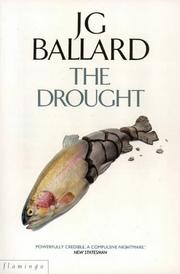 The DroughtJ. G. Ballard · 1965
 The Drowned WorldJ. G. Ballard · 1962
 MaddAdamMargaret Atwood · 2013
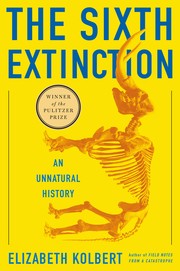 The Sixth ExtinctionElizabeth Kolbert, Marcel Blanc · 2014
Ranked by number of editions on Open Library, a rough measure of how lasting a book is.
🔗 Related topics
- Disaster risk reduction Disaster risk reduction aims to make disasters less likely to happen. The approach, also called DRR or disaster risk management, also aims to make disasters…
- Natural disaster A natural disaster is the very harmful impact on a society or community brought by a natural phenomenon or hazard. Some examples of natural hazards include…
- Hazard A hazard is a potential source of harm. Substances, events, or circumstances can constitute hazards when their nature would potentially allow them to cause…
- Climate risk Climate risk is the potential for problems for societies or ecosystems from the impacts of climate change. This can refer to both physical risks, such…
- United Nations Office for Disaster Risk Reduction The United Nations Office for Disaster Risk Reduction (UNDRR) was created in December 1999 to ensure the implementation of the International Strategy for…
- Climate change in the Philippines Climate change is having serious impacts in the Philippines such as increased frequency and severity of natural disasters, sea level rise, extreme rainfall…
- Environmental emergency An environmental emergency is defined as a "sudden-onset disaster or accident resulting from natural, technological or human-induced factors, or a combination…
- Social vulnerability In its broadest sense, social vulnerability is one dimension of vulnerability to multiple stressors and shocks, including abuse, social exclusion and natural…