Live briefing

Everything about Direct-sequence spread spectrum
Modulation technique to reduce signal interference
In telecommunications, direct-sequence spread spectrum (DSSS) is a spread-spectrum modulation technique primarily used to reduce overall signal interference. The direct-sequence modulation makes the transmitted signal wider in bandwidth than the information bandwidth. After the despreading or removal of the direct-sequence modulation in the receiver, the information bandwidth is restored, while the unintentional and intentional interference is substantially reduced. Wikipedia →
🧭 Start here: a 6-step reading path
- Read the overview: Direct-sequence spread spectrumA 5-minute orientation
- Skim a recent paper: Detection of Direct Sequence Spread Spectrum Signals Based on Deep LearningInfluential work since 2022
- Pick up a classic book: Ultra-Wideband CommunicationsThe most-reprinted book on the subject
- Read the landmark paper: MMSE interference suppression for direct-sequence spread-spectrum CDMACited 1,160 times
- Go sideways: Channel access methodA closely related topic
- Go sideways: Code-division multiple accessA closely related topic
📖 Definitions
No dictionary entry for this exact phrase.
🗂️ The subject at a glance
🏆 Landmark papers (most cited)
MMSE interference suppression for direct-sequence spread-spectrum CDMA
A chaotic direct-sequence spread-spectrum communication system
Blind estimation of direct sequence spread spectrum signals in multipath
Analysis of a direct-sequence spread-spectrum cellular radio system
An adaptive correlator receiver for direct-sequence spread-spectrum communication
Performance of Noncoherent Direct-Sequence Spread-Spectrum Multiple-Access Communications
Digital multi-carrier spread spectrum versus direct sequence spread spectrum for resistance to jamming and multipath
Trellis-coded direct-sequence spread-spectrum communications
🆕 Influential since 2022
Detection of Direct Sequence Spread Spectrum Signals Based on Deep Learning
Iterative double-differential direct-sequence spread spectrum reception in underwater acoustic channel with time-varying Doppler shifts
Performance of the Direct Sequence Spread Spectrum Underwater Acoustic Communication System with Differential Detection in Strong Multipath Propagation Conditions
CBTC Security and Reliability Enhancements by a Key-Based Direct Sequence Spread Spectrum Technique
Implementation of Underwater Electric Field Communication Based on Direct Sequence Spread Spectrum (DSSS) and Binary Phase Shift Keying (BPSK) Modulation
📚 Books worth reading
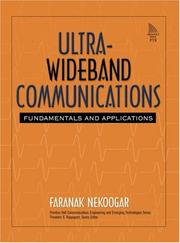 Ultra-Wideband CommunicationsFaranak Nekoogar · 2005
- 📕Proposed direct sequence spread spectrum voice techniques for the amateur radio serviceJ. E. Hershey · 1983
- 📕A direct sequence spread spectrum transmitterMichael Feerick · 1994
- 📕Direct sequence spread spectrum techniquesJ. E. Hershey · 1982
- 📕Direct Sequence Spread Spectrum Techniques (M-23)J. E. Hershey · 1985
- 📕Direct Sequence Spread Spectrum Techniques (Spread Spectrum Series , No 1)J. E. Hershey · 1985
- 📕Direct-Sequence Spread-Spectrum Acoustic Communications With CRV decomposition · 2004
- 📕Maximum-Likelihood Akquisition von Direct Sequence Spread-Spectrum SignalenGunnar Wetzger · 1998
Ranked by number of editions on Open Library, a rough measure of how lasting a book is.
🔗 Related topics
- Channel access method In telecommunications and computer networks, a channel access method or multiple access method allows more than two terminals connected to the same transmission…
- Code-division multiple access Code-division multiple access (CDMA) is a channel access method used by various radio communication technologies. CDMA is an example of multiple access…
- Frequency-hopping spread spectrum Frequency-hopping spread spectrum (FHSS) is a method of transmitting radio signals by rapidly changing the carrier frequency among many frequencies occupying…
- Orthogonal frequency-division multiplexing In telecommunications, orthogonal frequency-division multiplexing (OFDM) is a type of digital transmission used in digital modulation for encoding digital…
- Multi-carrier code-division multiple access Multi-carrier code-division multiple access (MC-CDMA) is a multiple access scheme used in OFDM-based telecommunication systems, allowing the system to…
- Chip (CDMA) In digital communications, a chip is a pulse of a direct-sequence spread spectrum (DSSS) code, such as a pseudo-random noise (PN) code sequence used in…
- Spread spectrum In telecommunications, especially radio communication, spread spectrum are techniques by which a signal (e.g., an electrical, electromagnetic, or acoustic)…
- MIMO-OFDM Multiple-input, multiple-output orthogonal frequency-division multiplexing (MIMO-OFDM) is the dominant air interface for 4G and 5G broadband wireless communicat…