Live briefing

Everything about Dijkstra's algorithm
Algorithm for finding shortest paths
Dijkstra's algorithm is an algorithm for finding the shortest paths between nodes in a weighted graph, which may represent, for example, a road network. It was conceived by computer scientist Edsger W. Dijkstra in 1956 and published three years later. Wikipedia →
🧭 Start here: a 6-step reading path
- Read the overview: Dijkstra's algorithmA 5-minute orientation
- Skim a recent paper: Improved Dijkstra Algorithm for Mobile Robot Path Planning and Obstacle AvoidanceInfluential work since 2022
- Pick up a classic book: Discrete and combinatorial mathematicsThe most-reprinted book on the subject
- Read the landmark paper: Fuzzy Dijkstra algorithm for shortest path problem under uncertain environmentCited 357 times
- Go sideways: Prim's algorithmA closely related topic
- Go sideways: Johnson's algorithmA closely related topic
📖 Definitions
No dictionary entry for this exact phrase.
🏆 Landmark papers (most cited)
Fuzzy Dijkstra algorithm for shortest path problem under uncertain environment
Surface Optimal Path Planning Using an Extended Dijkstra Algorithm
A biobjective Dijkstra algorithm
Prims-Aided Dijkstra Algorithm for Adaptive Protection in Microgrids
DIJKSTRA ALGORITHM USING UAV PATH PLANNING
AGV Path Planning based on Improved Dijkstra Algorithm
Hybrid Bellman–Ford–Dijkstra algorithm
AIS Based Shipping Routes Using the Dijkstra Algorithm
🆕 Influential since 2022
Improved Dijkstra Algorithm for Mobile Robot Path Planning and Obstacle Avoidance
Path Planning of Rail-Mounted Logistics Robots Based on the Improved Dijkstra Algorithm
Airport AGV path optimization model based on ant colony algorithm to optimize Dijkstra algorithm in urban systems
Evaluating an Application Aware Distributed Dijkstra Shortest Path Algorithm in Hybrid Cloud/Edge Environments
Targeted multiobjective Dijkstra algorithm
📚 Books worth reading
 Discrete and combinatorial mathematicsRalph P. Grimaldi · 1985
 Data Communications and NetworkingBehrouz A. Forouzan, Catherine Ann Coombs · 2000
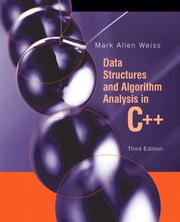 Data structures and algorithm analysis in CMark Allen Weiss · 1993
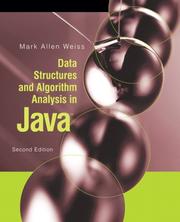 Data structures & algorithm analysis in JavaMark Allen Weiss · 1999
 Data structures and algorithms in JavaAdam Drozdek · 2001
 Data structures & algorithms in JavaRobert Lafore · 2003
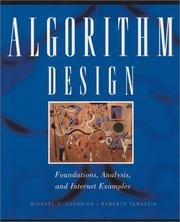 Algorithm designMichael T. Goodrich, Roberto Tamassia · 2001
 Introductory discrete mathematicsV. K. Balakrishnan · 1991
Ranked by number of editions on Open Library, a rough measure of how lasting a book is.
🔗 Related topics
- Prim's algorithm In computer science, Prim's algorithm is a greedy algorithm that finds a minimum spanning tree for a weighted undirected graph. This means it finds a subset…
- Johnson's algorithm Johnson's algorithm is a way to find the shortest paths between all pairs of vertices in an edge-weighted directed graph. It allows some of the edge weights…
- Suurballe's algorithm In theoretical computer science and network routing, Suurballe's algorithm is an algorithm for finding two disjoint paths in a nonnegatively-weighted directed…
- Parallel single-source shortest path algorithm A central problem in algorithmic graph theory is the shortest path problem. One of the generalizations of the shortest path problem is known as the si…
- Floyd–Warshall algorithm In computer science, the Floyd–Warshall algorithm (also known as Floyd's algorithm, the Roy–Warshall algorithm, the Roy–Floyd algorithm, or the WFI algorithm)…
- Bellman–Ford algorithm The Bellman–Ford algorithm is an algorithm that computes shortest paths from a single source vertex to all of the other vertices in a weighted digraph…
- Graph traversal In computer science, graph traversal (also known as graph search) refers to the process of visiting (checking and/or updating) each vertex in a graph.…
- Contraction hierarchies In computer science, the method of contraction hierarchies is a speed-up technique for finding the shortest path in a graph. The most intuitive applications…