Everything about Digital image processing
Algorithmic processing of digitally-represented images
Digital image processing is the use of a digital computer to process digital images through an algorithm. As a subcategory or field of digital signal processing, digital image processing has many advantages over analog image processing. It allows a much wider range of algorithms to be applied to the input data and can avoid problems such as the build-up of noise and distortion during processing. Since images are defined over two dimensions, digital image processing may be modeled in the form of multidimensional systems. The generation and development of digital image processing are mainly affected by three factors: first, the development of computers; second, the development of mathematics ; and third, the demand for a wide range of applications in environment, agriculture, military, industry and medical science has increased. Wikipedia →
🧭 Start here: a 6-step reading path
- Read the overview: Digital image processingA 5-minute orientation
- Skim a recent paper: Deep learning models for digital image processing: a reviewInfluential work since 2022
- Pick up a classic book: Digital image processingThe most-reprinted book on the subject
- Read the landmark paper: Digital Image ProcessingCited 221 times
- Go sideways: Digital imageA closely related topic
- Go sideways: Outline of computer visionA closely related topic
📖 Definitions
No dictionary entry for this exact phrase.
🗂️ The subject at a glance
🏆 Landmark papers (most cited)
Digital Image Processing
Digital image processing
Digital image processing
DIGITAL IMAGE PROCESSING
Digital Image Processing
Applications of Digital Image Processing
Digital image processing
Fundamentals of digital image processing
🆕 Influential since 2022
Deep learning models for digital image processing: a review
An image-to-answer algorithm for fully automated digital PCR image processing
Current Technologies and Applications of Digital Image Processing
Adversarial robust image processing in medical digital twin
Digital image processing realized by memristor-based technologies
📚 Books worth reading
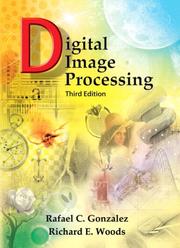 Digital image processingRafael C. Gonzalez, Richard E. Woods · 1977
 Digital image processingWilliam K. Pratt · 1978
- 📕Applied medical image processingWolfgang Birkfellner · 2010
 Image processing, analysis, and machine visionMilan Sonka, Vaclav Hlavac · 1993
 Fundamentals of digital image processingChris Solomon, Stuart Gibson · 2007
 Color image processingRastislav Lukac, Kostantinos N. Plataniotis · 2006
- 📕Image processing and analysis with graphsOlivier Lézoray, Leo Grady · 2012
 A practical approach to medical image processingElizabeth Berry, Elizabeth Berry · 2007
Ranked by number of editions on Open Library, a rough measure of how lasting a book is.
🔗 Related topics
- Digital image A digital image is an image composed of picture elements, also known as pixels, each with finite, discrete quantities of numeric representation for its…
- Outline of computer vision The following outline is provided as an overview of and topical guide to computer vision: Computer vision – interdisciplinary field that deals with how…
- Motion compensation Motion compensation in computing is an algorithmic technique used to predict a frame in a video given the previous and/or future frames by accounting for…
- Video camera A video camera is an optical instrument that captures videos, as opposed to a movie camera, which records images on film. Video cameras were initially…
- Image sensor An image sensor or imager is a sensor used for imaging. It converts light into electrical signals, small bursts of current in proportion to the light intensity…
- Nasir Ahmed (engineer) Nasir Ahmed (born 1940) is an American electrical engineer and computer scientist. He is Professor Emeritus of Electrical and Computer Engineering at University…
- Digital video Digital video is an electronic representation of moving visual images (video) in the form of encoded digital data. This is in contrast to analog video…
- Discrete cosine transform A discrete cosine transform (DCT) expresses a finite sequence of data points in terms of a sum of cosine functions oscillating at different frequencies…