Live briefing

Everything about Digital data
Discrete, discontinuous representation of information
Digital data or digital information, in information theory and information systems, is data or information represented as a string of discrete symbols, each of which can take on one of only a finite number of values from some alphabet, such as letters or digits. An example is a text document, which consists of a string of alphanumeric characters. The most common form of digital data in modern information systems is binary data, which is represented by a string of binary digits (bits) each of which can have one of two values, either 0 or 1. Wikipedia →
🧭 Start here: a 6-step reading path
- Read the overview: Digital dataA 5-minute orientation
- Skim a recent paper: The Seventeenth Data Release of the Sloan Digital Sky Surveys: Complete Release of MaNGA, MaStar, and APOGEE-2 DataInfluential work since 2022
- Pick up a classic book: iPodThe most-reprinted book on the subject
- Read the landmark paper: edgeR : a Bioconductor package for differential expression analysis of digital gene expression dataCited 41,314 times
- Go sideways: Computer data storageA closely related topic
- Go sideways: Glossary of computer scienceA closely related topic
📖 Definitions
No dictionary entry for this exact phrase.
🏆 Landmark papers (most cited)
edgeR : a Bioconductor package for differential expression analysis of digital gene expression data
Digital steganography: hiding data within data
Data, Competition, and Digital Platforms
Digital companion species and eating data: Implications for theorising digital data–human assemblages
Digital inclusion and data profiling
Digital Phenotyping Using Multimodal Data
Digital hoarding and personal use digital data
Smart Data for Digital Humanities
🆕 Influential since 2022
The Seventeenth Data Release of the Sloan Digital Sky Surveys: Complete Release of MaNGA, MaStar, and APOGEE-2 Data
A whole-slide foundation model for digital pathology from real-world data
Digital servitization in digital enterprise: Leveraging digital platform capabilities to unlock data value
Maintenance Digital Twin using vibration data
Digital Twins for Data Centers
📚 Books worth reading
 iPodJ. D. Biersdorfer, David Pogue · 2003
 Information Systems Guides (CCTA Information Systems Guides)Central Computer & Telecommunications Agency · 1989
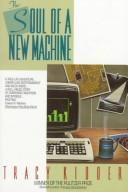 The Soul of a New MachineTracy Kidder · 1981
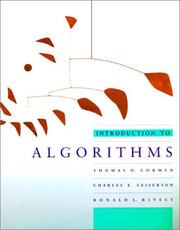 Introduction to AlgorithmsThomas H. Cormen, Charles E. Leiserson · 1990
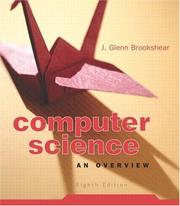 Computer scienceJ. Glenn Brookshear, Brookshear · 1985
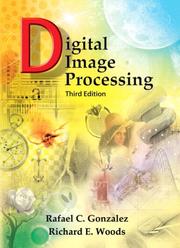 Digital image processingRafael C. Gonzalez, Richard E. Woods · 1977
 Computer scienceJ. Glenn Brookshear, Glenn Brookshear · 2002
 Dictionary of computingS. M. H. Collin, Simon Collin · 1988
Ranked by number of editions on Open Library, a rough measure of how lasting a book is.
🔗 Related topics
- Computer data storage Computer data storage or digital data storage is the retention of digital data via technology consisting of computer components and recording media. Digital…
- Glossary of computer science This glossary of computer science is a list of definitions of terms and concepts used in computer science, its sub-disciplines, and related fields, including…
- Disk encryption Disk encryption is a technology which protects information by converting it into code that cannot be deciphered easily by unauthorized people or processes…
- Encryption software Encryption software is software that uses cryptography to prevent unauthorized access to digital information. Cryptography is used to protect digital informatio…
- Hardware register In digital electronics, a register is a group of memory cells that stores a collection of bits and continuously outputs the stored data. It typically consists…
- DTV receiver A DTV receiver is a set-top box that permits the reception of digital television. Its components are very similar to a desktop PC. The DTV receiver is…
- Hack computer The Hack computer is a theoretical computer design created by Noam Nisan and Shimon Schocken and described in their book, The Elements of Computing Systems:…
- State (computer science) In information technology and computer science, a system is described as stateful if it is designed to remember preceding events or user interactions and…