Everything about Digest access authentication
Method of negotiating credentials between web server and browser

Digest access authentication is one of the agreed-upon methods a web server can use to negotiate credentials, such as username or password, with a user's web browser. This can be used to confirm the identity of a user before sending sensitive information, such as online banking transaction history. It applies a hash function to the username and password before sending them over the network. In contrast, basic access authentication uses the easily reversible Base64 encoding instead of hashing, making it non-secure unless used in conjunction with TLS. Wikipedia →
🧭 Start here: a 6-step reading path
- Read the overview: Digest access authenticationA 5-minute orientation
- Pick up a classic book: BibleThe most-reprinted book on the subject
- Go sideways: Salted Challenge Response Authentication MechanismA closely related topic
- Go sideways: Basic access authenticationA closely related topic
📖 Definitions
No dictionary entry for this exact phrase.
🏆 Landmark papers (most cited)
- No matching papers found.
📚 Books worth reading
 BibleBible · 1200
 American FilmAmerican Film Institute · 1975
 Computer NetworksAndrew S. Tanenbaum, John David Wetherall · 1981
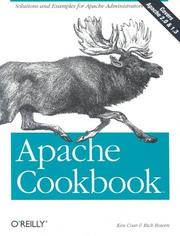 Apache CookbookKen Coar, Rich Bowen · 2003
 Data Communications and NetworkingBehrouz A. Forouzan, Catherine Ann Coombs · 2000
 Policies and Research in Identity ManagementSimone Fischer-Hübner · 2010
 TCP/IP IllustratedW. Richard Stevens, Kevin R. Fall · 1993
 RESTful Java with JAXRS 20Bill Burke · 2013
Ranked by number of editions on Open Library, a rough measure of how lasting a book is.
🔗 Related topics
- Salted Challenge Response Authentication Mechanism In cryptography, the Salted Challenge Response Authentication Mechanism (SCRAM) is a family of modern, password-based challenge–response authentication…
- Basic access authentication In the context of an HTTP transaction, basic access authentication is a method for an HTTP user agent (e.g. a web browser) to provide a user name and password…
- CRAM-MD5 In cryptography, CRAM-MD5 is a challenge–response authentication mechanism (CRAM) based on the HMAC-MD5 algorithm. As one of the mechanisms supported by…
- RADIUS Remote Authentication Dial-In User Service (RADIUS) is a networking protocol that provides centralized authentication, authorization, and accounting (AAA)…
- Cryptographic nonce In cryptography, a nonce is an arbitrary number that can be used just once in a cryptographic communication. It is often a random or pseudo-random number…
- Challenge–response authentication In computer security, challenge–response authentication is a family of protocols in which one party presents a question ("challenge") and another party…
- NTLM In a Windows network, NT (New Technology) LAN Manager (NTLM) is a suite of Microsoft security protocols intended to provide authentication, integrity,…
- SMTP Authentication SMTP Authentication, often abbreviated SMTP AUTH, is an extension of the Simple Mail Transfer Protocol (SMTP) whereby a client may log in using any authenticati…