Live briefing

Everything about Device driver
Software interface to attached devices
A device driver is software that operates or controls a particular type of device that is attached to a computer. A driver provides a software interface to hardware devices, enabling other software to access hardware functions without needing to know precise details about the hardware. Wikipedia →
🧭 Start here: a 6-step reading path
- Read the overview: Device driverA 5-minute orientation
- Skim a recent paper: Review of wide band-gap technology: power device, gate driver, and converter designInfluential work since 2022
- Pick up a classic book: Linux device driversThe most-reprinted book on the subject
- Read the landmark paper: A load driver device for engineering modularity in biological networksCited 153 times
- Go sideways: UEFIA closely related topic
- Go sideways: VirtualizationA closely related topic
📖 Definitions
Noun Software, usually supplied with the operating system or by a hardware manufacturer, that communicates between the operating system of a personal computer and a specific hardware device.
🏆 Landmark papers (most cited)
A load driver device for engineering modularity in biological networks
OLED Electrical Equivalent Device for Driver Topology Design
Novel plasma display driver with low voltage/current device stresses
Tensor RT optimized driver drowsiness detection system using edge device
A driver gas detection device for shock tunnels
Development of an integrated pointing device driver for the disabled
Priority queue-based IEEE1394 device driver supporting real-time characteristics
Portable Pneumatic Biventricular Driver for the Thoratec Ventricular Assist Device
🆕 Influential since 2022
Review of wide band-gap technology: power device, gate driver, and converter design
Do driver monitoring technologies improve the driving behaviour of distracted drivers? A simulation study to assess the impact of an auditory driver distraction warning device on driving performance
Driver monitoring and passenger interaction system using wearable device in intelligent vehicle
Electric personal mobility device driver behaviors, their antecedents and consequences: A narrative review
A Novel SiC Device Model With Power Stage and Gate Driver Uncoupled
📚 Books worth reading
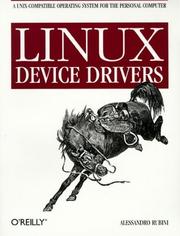 Linux device driversAlessandro Rubini, Jonathan Corbet · 1998
 Addressing Techniques of Liquid Crystal DisplaysTemkar N. Ruckmongathan · 2014
 Developing Drivers with the Windows Driver FoundationGuy Smith · 2007
 Essential Linux Device DriversSreekrishnan Venkateswaran, Sreekrishnan Venkateswaran · 2008
 Writing Windows WDM Device DriversChris Cant · 1999
 DockerSean P. Kane, Karl Matthias · 2018
 Writing UNIX device drivers in CPhillip M. Adams, Clovis L. Tondo · 1992
 Writing MS-DOS device driversRobert Lai · 1987
Ranked by number of editions on Open Library, a rough measure of how lasting a book is.
🔗 Related topics
- UEFI Unified Extensible Firmware Interface or UEFI is a specification for the firmware architecture of a computing platform. When a computer is powered on,…
- Virtualization In computing, virtualization (or virtualisation in Commonwealth English; see spelling differences) abbreviated as v12n, is a series of technologies that…
- Operating system An operating system (OS) is system software that manages computer hardware and software resources, and provides common services for computer programs.…
- QEMU The Quick Emulator (QEMU) is a free and open-source machine emulator and virtualizer. As a Virtual Machine Monitor (VMM) it supports a number of hypervisors…
- Windows Driver Model In computing, the Windows Driver Model (WDM) – also known at one point as the Win32 Driver Model – is a framework for device drivers that was introduced…
- DMA attack A DMA attack is a type of side channel attack in computer security, in which an attacker can penetrate a computer or other device, by exploiting the presence…
- Kernel (operating system) A kernel is a computer program at the core of a computer's operating system that always has complete control over everything in the system. The kernel…
- Hyper-V Hyper-V is a native hypervisor developed by Microsoft; it can create virtual machines on x86-64 systems running Windows. It is included in Pro and Enterprise…