Live briefing

Everything about Design rationale
Explicit listing of design decisions
A design rationale is an explicit documentation of the reasons behind decisions made when designing a system or artifact. As initially developed by W.R. Kunz and Horst Rittel, design rationale seeks to provide argumentation-based structure to the political, collaborative process of addressing wicked problems. Wikipedia →
🧭 Start here: a 6-step reading path
- Read the overview: Design rationaleA 5-minute orientation
- Skim a recent paper: Oxygen Evolution/Reduction Reaction Catalysts: From In Situ Monitoring and Reaction Mechanisms to Rational DesignInfluential work since 2022
- Pick up a classic book: Course designThe most-reprinted book on the subject
- Read the landmark paper: The Delphi method as a research tool: an example, design considerations and applicationsCited 3,747 times
- Go sideways: Issue-based information systemA closely related topic
- Go sideways: Design knowledgeA closely related topic
📖 Definitions
No dictionary entry for this exact phrase.
🗂️ The subject at a glance
🏆 Landmark papers (most cited)
The Delphi method as a research tool: an example, design considerations and applications
The cardiovascular health study: Design and rationale
Design rationale systems: understanding the issues
Rationale for Determining Design Wind Velocities
What's in Design Rationale?
A survey of architecture design rationale
Capturing design rationale
Functional representation as design rationale
🆕 Influential since 2022
Oxygen Evolution/Reduction Reaction Catalysts: From In Situ Monitoring and Reaction Mechanisms to Rational Design
Abiraterone plus prednisone added to androgen deprivation therapy and docetaxel in de novo metastatic castration-sensitive prostate cancer (PEACE-1): a multicentre, open-label, randomised, phase 3 study with a 2 × 2 factorial design
Rational design of Lewis base molecules for stable and efficient inverted perovskite solar cells
CAR immune cells: design principles, resistance and the next generation
Learning design to support student-AI collaboration: perspectives of leading teachers for AI in education
📚 Books worth reading
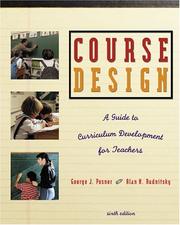 Course designGeorge J. Posner, Alan N. Rudnitsky · 1978
 Events design and experienceGraham Berridge · 2007
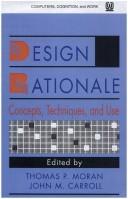 Design RationaleThomas P. Moran, John M. Carroll · 1996
 A comparative analysis of design rationale representationsJintae Lee · 1992
- 📕The RAND-ABEL programming languageNorman Zalmon Shapiro, H. Edward Hall · 1985
 Hybrid Ship HullsVladimir M. Shkolnikov · 2014
 Creativity and RationaleJohn M. Carroll · 2012
- 📕Contingent CapitalCeyla Pazarbasioglu, Jian-Ping Zhou · 2011
Ranked by number of editions on Open Library, a rough measure of how lasting a book is.
🔗 Related topics
- Issue-based information system The issue-based information system (IBIS) is an argumentation-based approach to clarifying wicked problems—complex, ill-defined problems that involve multiple…
- Design knowledge There is a large body of knowledge that designers call upon and use during the design process to match the ever-increasing complexity of design problems…
- Horst Rittel Horst Wilhelm Johannes Rittel (14 July 1930 – 9 July 1990) was a design theorist and university professor. He is best known for popularizing the concept…
- IDEF6 IDEF6 (Integrated Definition for Design Rationale Capture) is a method to facilitate the acquisition, representation, and manipulation of the design rationale…
- Wicked problem In planning and policy, a wicked problem is a problem that is difficult or impossible to solve because of incomplete, contradictory, and changing requirements…
- IDEF IDEF, initially an abbreviation of ICAM Definition and renamed in 1999 as Integration Definition, is a family of modeling languages in the field of systems…
- Compendium (software) Compendium is a computer program and social science tool that facilitates the mapping and management of ideas and arguments. The software provides a visual…
- Design methods Design methods are procedures, techniques, aids, or tools for designing. They offer a number of different kinds of activities that a designer might use…