Live briefing

Everything about Dense graph
Graph with almost the max amount of edges
In mathematics, a dense graph is a graph in which the number of edges is close to the maximal number of edges. The opposite, a graph with only a few edges, is a sparse graph. The distinction of what constitutes a dense or sparse graph is ill-defined, and is often represented by 'roughly equal to' statements. Due to this, the way that density is defined often depends on the context of the problem. Wikipedia →
🧭 Start here: a 6-step reading path
- Read the overview: Dense graphA 5-minute orientation
- Skim a recent paper: Dynamic Dense Graph Convolutional Network for Skeleton-Based Human Motion PredictionInfluential work since 2022
- Pick up a classic book: Trends and Topics in Computer VisionThe most-reprinted book on the subject
- Read the landmark paper: Liquid-Mediated Dense Integration of Graphene Materials for Compact Capacitive Energy StorageCited 1,806 times
- Go sideways: Shallow minorA closely related topic
- Go sideways: Bounded expansionA closely related topic
📖 Definitions
No dictionary entry for this exact phrase.
🗂️ The subject at a glance
🏆 Landmark papers (most cited)
Liquid-Mediated Dense Integration of Graphene Materials for Compact Capacitive Energy Storage
Limits of dense graph sequences
The Nonlinear Heat Equation on Dense Graphs and Graph Limits
On triangulation-based dense neighborhood graph discovery
How many random edges make a dense graph hamiltonian?
Percolation on dense graph sequences
Dense Video Captioning Using Graph-Based Sentence Summarization
RDGCN: Reasonably dense graph convolution network for pedestrian trajectory prediction
🆕 Influential since 2022
Dynamic Dense Graph Convolutional Network for Skeleton-Based Human Motion Prediction
Dense Graph Convolutional With Joint Cross-Attention Network for Multimodal Emotion Recognition
Action recognition via pose-based graph convolutional networks with intermediate dense supervision
DensE: An enhanced non-commutative representation for knowledge graph embedding with adaptive semantic hierarchy
Lightweight dense video captioning with cross-modal attention and knowledge-enhanced unbiased scene graph
📚 Books worth reading
 Trends and Topics in Computer VisionKiriakos N. Kutulakos · 2012
 The mathematics of Paul ErdösRonald L. Graham, Jaroslav Nešetřil · 1997
- 📕Applied data miningGuandong Xu · 2013
 Computational Visual MediaShi-Min Hu · 2012
 Simulation, Modeling, and Programming for Autonomous RobotsItsuki Noda · 2008
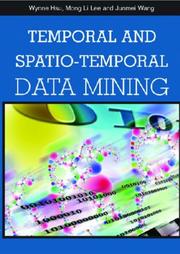 Temporal and spatio-temporal data miningWynne Hsu, Wynne Hsu · 2007
 SimCity 2000Nick Dargahi, Michael Bremer · 1994
 Intelligent Science and Intelligent Data EngineeringJian Yang · 2013
Ranked by number of editions on Open Library, a rough measure of how lasting a book is.
🔗 Related topics
- Shallow minor In graph theory, a shallow minor or limited-depth minor is a restricted form of a graph minor in which the subgraphs that are contracted to form the minor…
- Bounded expansion In graph theory, a family of graphs is said to have bounded expansion if all of its shallow minors are sparse graphs. Many natural families of sparse graphs…
- Tree-depth In graph theory, the tree-depth of a connected undirected graph G {\displaystyle G} is a numerical invariant of G {\displaystyle G} , the minimum height…
- Laman graph In graph theory, the Laman graphs are a family of sparse graphs describing the minimally rigid systems of rods and joints in the plane. Formally, a Laman…
- Pseudoforest In graph theory, a pseudoforest is an undirected graph in which every connected component has at most one cycle. That is, it is a system of vertices and…
- Star coloring In the mathematical field of graph theory, a star coloring of a graph G is a (proper) vertex coloring in which every path on four vertices uses at least…
- Graph minor In graph theory, an undirected graph H is called a minor of the undirected graph G if H can be formed from G by deleting edges and vertices and by contracting…
- Degeneracy (graph theory) In graph theory, a k-degenerate graph is an undirected graph in which every non-empty subgraph has at least one vertex of degree at most k. That is, some…