Everything about Deep Blue (chess computer)
Chess-playing computer made by IBM

Deep Blue was a customized IBM RS/6000 SP supercomputer for chess-playing designed by computer scientist Feng-hsiung Hsu. It was the first computer to win a game, and the first to win a match, against a reigning world champion under regular time controls. Development began in 1985 at Carnegie Mellon University under the name ChipTest. It then moved to IBM, where it was first renamed Deep Thought, then again in 1989 to Deep Blue. In 1996, it was used to compete against world champion Garry Kasparov in a six-game match, where it won one, drew two, and lost three games. In 1997, it underwent an upgrade, and in a six-game rematch it defeated Kasparov by winning two games and drawing three. Deep Blue's victory is considered a milestone in the history of artificial intelligence and has been the subject of several books and films. Wikipedia →
🧭 Start here: a 6-step reading path
- Read the overview: Deep Blue (chess computer)A 5-minute orientation
- Skim a recent paper: Deep-blue organic light-emitting diodes for ultrahigh-definition displaysInfluential work since 2022
- Pick up a classic book: Behind Deep BlueThe most-reprinted book on the subject
- Read the landmark paper: Deep BlueCited 915 times
- Go sideways: Feng-hsiung HsuA closely related topic
- Go sideways: Deep Thought (chess computer)A closely related topic
📖 Definitions
Adjective An intense, relatively dark blue.
Adjective Of a geographic area, state, or district, heavily and consistently voting for the Democratic Party.
Noun An intense, relative dark blue.
🗂️ The subject at a glance
🏆 Landmark papers (most cited)
Deep Blue
TADF sensitization targets deep-blue
IBM's Deep Blue Chess grandmaster chips
Methane in the Deep Blue Sea
Knowledge discovery in deep blue
Deep blue anthocyanins from blue Dianella berries
Efficient deep-blue fluorescent emitters from imidazole functionalized anthracenes for simple structure deep-blue electroluminescent devices
Deep blue electroluminescent phenylene-based polymers
🆕 Influential since 2022
Deep-blue organic light-emitting diodes for ultrahigh-definition displays
Realizing efficient blue and deep-blue delayed fluorescence materials with record-beating electroluminescence efficiencies of 43.4%
Deep‐Blue OLEDs with Rec.2020 Blue Gamut Compliance and EQE Over 22% Achieved by Conformation Engineering
The Deepest Blue: Major Advances and Challenges in Deep Blue Emitting Quasi‐2D and Nanocrystalline Perovskite LEDs
Deep‐Blue OLEDs with BT. 2020 Blue Gamut, External Quantum Efficiency Approaching 40%
📚 Books worth reading
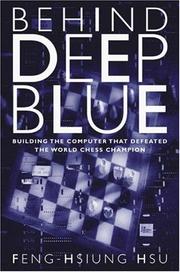 Behind Deep BlueFeng-Hsiung Hsu · 2002
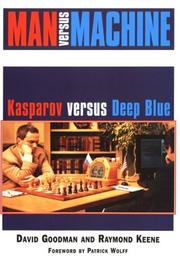 Man versus machineGoodman, David · 1997
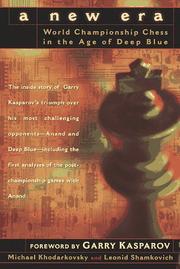 A new eraKhodarkovsky, Michael · 1997
- 📕Deep thinkingG. K. Kasparov · 2017
 Behind deep blueFeng-hsiung Hsu · 2002
 Kasparov versus Deep BlueMonroe Newborn · 1997
 Deep BlueMonroe Newborn · 2003
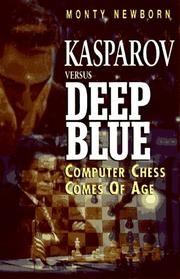 Kasparov versus Deep BlueMonty Newborn · 1996
Ranked by number of editions on Open Library, a rough measure of how lasting a book is.
🔗 Related topics
- Feng-hsiung Hsu Feng-hsiung Hsu (Chinese: 許峰雄; pinyin: Xǔ Fēngxióng; born January 1, 1959) (nicknamed Crazy Bird) is a Taiwanese-American computer scientist and electrical…
- Deep Thought (chess computer) Deep Thought was a computer designed to play chess. Deep Thought was initially developed at Carnegie Mellon University and later at IBM. It was second…
- Murray Campbell Murray Campbell is a Canadian computer scientist known for being part of the team that created Deep Blue; the first computer to defeat a world chess champion…
- Thomas Anantharaman Thomas S. Anantharaman is a computer statistician specializing in Bayesian inference approaches for NP-complete problems. He is best known for his work…
- History of chess engines The history of chess began nearly 1500 years ago. The introduction of chess engines around 1960 and permanent improvement over time has made chess engines…
- Human–computer chess matches This article documents the progress of significant human–computer chess matches. Chess computers were first able to beat strong chess players in the late…
- ChipTest ChipTest was a 1985 chess playing computer built by Feng-hsiung Hsu, Thomas Anantharaman and Murray Campbell at Carnegie Mellon University. It is the predecesso…
- Deep Blue versus Kasparov, 1997, Game 6 Game 6 of the Deep Blue–Kasparov rematch, played in New York City on 11 May 1997 and starting at 3:00 p.m. EDT, was the final chess game in the 1997 rematch…