Everything about Deductive classifier
A deductive classifier is a type of artificial intelligence inference engine. It takes as input a set of declarations in a frame language about a domain such as medical research or molecular biology. For example, the names of classes, sub-classes, properties, and restrictions on allowable values. The classifier determines if the various declarations are logically consistent and if not will highlight the specific inconsistent declarations and the inconsistencies among them. If the declarations are consistent the classifier can then assert additional information based on the input. For example, it can add information about existing classes, create additional classes, etc. This differs from traditional inference engines that trigger off of IF-THEN conditions in rules. Classifiers are also similar to theorem provers in that they take as input and produce output via first-order logic. Classifiers originated with KL-ONE frame languages. They are increasingly significant now that they form a part in the enabling technology of the Semantic Web. Modern classifiers leverage the Web Ontology Language. The models they analyze and generate are called ontologies. Wikipedia →
🧭 Start here: a 6-step reading path
- Read the overview: Deductive classifierA 5-minute orientation
- Pick up a classic book: PsychologyThe most-reprinted book on the subject
- Go sideways: Knowledge representation and reasoningA closely related topic
- Go sideways: LOOM (ontology)A closely related topic
📖 Definitions
No dictionary entry for this exact phrase.
🗂️ The subject at a glance
🏆 Landmark papers (most cited)
- No matching papers found.
📚 Books worth reading
 PsychologyMichael Maher · 1890
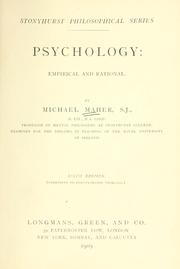 PsychologyMaher, Michael · 1900
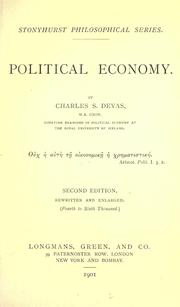 Political EconomyCharles S. Devas · 1892
 Lower your taxes-big time!Sanford C. Botkin · 2003
- 📕Tax administrationNatwar M. Gandhi · 1992
 Socratic logicPeter Kreeft · 2003
 Headlines IIIJay Leno · 1991
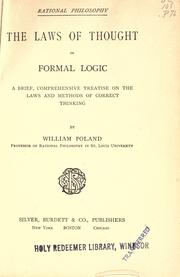 The laws of thought, or formal logicWilliam Poland · 1892
Ranked by number of editions on Open Library, a rough measure of how lasting a book is.
🔗 Related topics
- Knowledge representation and reasoning Knowledge representation (KR) aims to model information in a structured manner to formally represent it as knowledge in knowledge-based systems whereas…
- LOOM (ontology) Loom is a knowledge representation language developed by researchers in the artificial intelligence research group at the University of Southern California's…
- Frame (artificial intelligence) Frames are an artificial intelligence data structure used to divide knowledge into substructures by representing "stereotyped situations". They were proposed…
- KL-ONE KL-ONE (pronounced "kay ell won") is a knowledge representation system in the tradition of semantic networks and frames; that is, it is a frame language…
- Logic in computer science Logic in computer science covers the overlap between the field of logic and that of computer science. The topic can essentially be divided into three main…
- Reasoning system In information technology a reasoning system is a software system that generates conclusions from available knowledge using logical techniques such as…
- Ontology language In computer science and artificial intelligence, ontology languages are formal languages used to construct ontologies. They allow the encoding of knowledge…
- Web Ontology Language The Web Ontology Language (OWL) is a family of knowledge representation languages for authoring ontologies. Ontologies are a formal way to describe taxonomies…