Everything about Deduction theorem
Metatheorem in mathematical logic
In mathematical logic, a deduction theorem is a metatheorem that justifies doing conditional proofs from a hypothesis in systems that do not explicitly axiomatize that hypothesis, i.e. to prove an implication, it is sufficient to assume as a hypothesis and then proceed to derive. Deduction theorems exist for both propositional logic and first-order logic. The deduction theorem is an important tool in Hilbert-style deduction systems because it permits one to write more comprehensible and usually much shorter proofs than would be possible without it. In certain other formal proof systems the same conveniency is provided by an explicit inference rule; for example natural deduction calls it implication introduction. Wikipedia →
🧭 Start here: a 6-step reading path
- Read the overview: Deduction theoremA 5-minute orientation
- Skim a recent paper: The distribution effect of urbanization: Theoretical deduction and evidence from ChinaInfluential work since 2022
- Pick up a classic book: Mathematical logicThe most-reprinted book on the subject
- Read the landmark paper: Automatic Deduction Theorem of Overall Transfer Equation of Multibody SystemCited 70 times
- Go sideways: Implicational propositional calculusA closely related topic
- Go sideways: Hilbert systemA closely related topic
📖 Definitions
Noun A procedure for "discharging" assumptions from an inference, causing them to become antecedents of the conclusion; or vice versa. Symbolically, the conversion of an inference of the form P,A⊢C to an inference of the form P⊢A→C or vice versa, where ⊢ is the turnstile symbol. The validity of the procedure is a metatheorem of the given logical theory.
🏆 Landmark papers (most cited)
Automatic Deduction Theorem of Overall Transfer Equation of Multibody System
Algebraization, Parametrized Local Deduction Theorem and Interpolation for Substructural Logics over FL
Does the deduction theorem fail for modal logic?
The parameterized local deduction theorem for quasivarieties of algebras and its application
The deduction theorem in a functional calculus of first order based on strict implication
Upside-down meta-interpretation of the model elimination theorem-proving procedure for deduction and abduction
The deduction theorem for Łukasiewicz many-valued propositional calculi
The deduction theorem for quantum logic—some negative results
🆕 Influential since 2022
The distribution effect of urbanization: Theoretical deduction and evidence from China
Deduction Theorem in Congruential Modal Logics
Towards multi-clause automated deduction and theorem generation: Constructing and applying standard contradictions
Ruth Barcan Marcus on the Deduction Theorem in Modal Logic
A Landscape of Logics beyond the Deduction Theorem (and Moore’s Paradox)
📚 Books worth reading
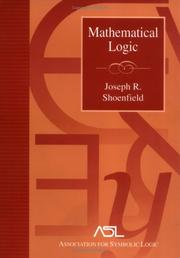 Mathematical logicJoseph R. Shoenfield · 1967
 Propositional logicH. Kleine Büning, Hans Kleine Büning · 1999
 DeductionWOLFGANG BIBEL · 1993
 Handbook of automated reasoningJ. A. Robinson, A. Voronkov · 2001
Ranked by number of editions on Open Library, a rough measure of how lasting a book is.
🔗 Related topics
- Implicational propositional calculus In mathematical logic, the implicational propositional calculus is a version of classical propositional calculus that uses only one connective, called…
- Hilbert system In logic, more specifically proof theory, a Hilbert system, sometimes called Hilbert calculus, Hilbert-style system, Hilbert-style proof system, Hilbert-style…
- Cut-elimination theorem The cut-elimination theorem (or Gentzen's Hauptsatz) is the central result establishing the significance of the sequent calculus. It was originally proved…
- Hypothetical syllogism In classical logic, a hypothetical syllogism is a valid argument form, a deductive syllogism with a conditional statement for one or both of its premises…
- Heyting arithmetic In mathematical logic, Heyting arithmetic H A {\displaystyle {\mathsf {HA}}} is an axiomatization of arithmetic in accordance with the philosophy of intuitionis…
- Löb's theorem In mathematical logic, Löb's theorem states that in Peano arithmetic (PA) (or any formal system including PA), for any formula P, if it is provable in…
- Minimal logic Minimal logic, or minimal calculus, is a symbolic logic system originally developed by Ingebrigt Johansson under the name "Minimalkalkül". It is a paraconsisten…
- Admissible rule In logic, a rule of inference is admissible in a formal system if the set of theorems of the system does not change when that rule is added to the existing…