Everything about Data validation
Process of ensuring computer data is both correct and useful
In computing, data validation or input validation is the process of ensuring data has undergone data cleansing to confirm it has data quality, that is, that it is both correct and useful. It uses routines, often called "validation rules", "validation constraints", or "check routines", that check for correctness, meaningfulness, and security of data that are input to the system. The rules may be implemented through the automated facilities of a data dictionary, or by the inclusion of explicit application program validation logic of the computer and its application. Wikipedia →
🧭 Start here: a 6-step reading path
- Read the overview: Data validationA 5-minute orientation
- Skim a recent paper: Being Aware of Data Leakage and Cross‐Validation Scaling in Chemometric Model ValidationInfluential work since 2022
- Pick up a classic book: GAMP Good Practice GuideThe most-reprinted book on the subject
- Read the landmark paper: Abstract data types and software validationCited 255 times
- Go sideways: Data cleansingA closely related topic
- Go sideways: Extract, transform, loadA closely related topic
📖 Definitions
No dictionary entry for this exact phrase.
🗂️ The subject at a glance
🏆 Landmark papers (most cited)
Abstract data types and software validation
Cross-Validation for Correlated Data
Proteomics-based Validation of Genomic Data
Proteomics data validation: why all must provide data
Substation data validation
Biomarker Validation: Common Data Analysis Concerns
Validation of Pyroshock Data
Axon Registry® data validation
🆕 Influential since 2022
Being Aware of Data Leakage and Cross‐Validation Scaling in Chemometric Model Validation
Community recommendations on cryoEM data archiving and validation
Synthetic Tabular Data Validation: A Divergence-Based Approach
Participant-Aware Model Validation for Repeated-Measures Data: Comparative Cross-Validation Study
Data-Driven Input Reconstruction and Experimental Validation
📚 Books worth reading
 GAMP Good Practice GuideISPE · 2005
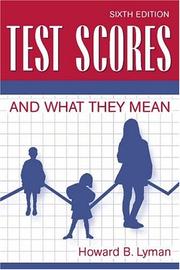 Test scores and what they meanHoward Burbeck Lyman · 1963
- 📕Pharmaceutical computer systems validationGuy Wingate · 2010
 Computer Systems ValidationGuy Wingate · 2003
 Software quality assurance SOPs for healthcare manufacturersSteven R. Mallory · 1997
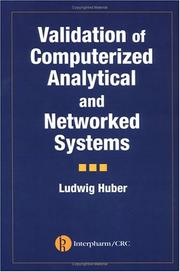 Validation of Computerized Analytical and Networked SystemsLudwig Huber · 2001
 Software TestingPeter Morgan, Angelina Samaroo · 2006
- 📕Data sparseness and online pretest item calibration/scaling methods in CATJae-Chun Ban · 2002
Ranked by number of editions on Open Library, a rough measure of how lasting a book is.
🔗 Related topics
- Data cleansing Data cleansing or data cleaning is the process of identifying and correcting (or removing) corrupt, inaccurate, or irrelevant records from a dataset, table…
- Extract, transform, load Extract, transform, load (ETL) is a three-phase computing process where data are extracted from an input source, transformed (including cleaning), and…
- Data integrity Data integrity is the maintenance of, and the assurance of, data accuracy and consistency over its entire life-cycle and is a critical aspect to the design…
- Software verification and validation In software project management, software testing, and software engineering, verification and validation is the process of checking that a software system…
- Product key A product key, also known as a software key, serial key or activation key, is a specific software-based key for a computer program. It certifies that the…
- Entity–attribute–value model An entity–attribute–value model (EAV) is a data model optimized for the space-efficient storage of sparse—or ad-hoc—property or data values, intended for…
- Data dictionary A data dictionary, or metadata repository, as defined in the IBM Dictionary of Computing, is a "centralized repository of information about data such as…
- ACID In computer science, ACID (atomicity, consistency, isolation, durability) is a set of properties of database transactions intended to guarantee data validity…