Everything about Data Coding Scheme
Online messaging standard
Data Coding Scheme is a one-octet field in Short Messages (SM) and Cell Broadcast Messages (CB) which carries a basic information how the recipient handset should process the received message. The information includes:the character set or message coding, which determines the encoding of the message user data the message class, which determines to which component of the Mobile Station (MS) or User Equipment (UE) the message should be delivered the request to automatically delete the message after reading the state of flags indicating presence of unread voicemail, fax, e-mail or other messages the indication that the message content is compressed the language of the cell broadcast message Wikipedia →
🧭 Start here: a 6-step reading path
- Read the overview: Data Coding SchemeA 5-minute orientation
- Skim a recent paper: Joint Task and Data-Oriented Semantic Communications: A Deep Separate Source-Channel Coding SchemeInfluential work since 2022
- Pick up a classic book: Communications, Signal Processing, and SystemsThe most-reprinted book on the subject
- Read the landmark paper: Level C+ data reuse scheme for motion estimation with corresponding coding ordersCited 93 times
- Go sideways: GSM 03.38A closely related topic
- Go sideways: GSM 03.40A closely related topic
📖 Definitions
No dictionary entry for this exact phrase.
🗂️ The subject at a glance
🏆 Landmark papers (most cited)
Level C+ data reuse scheme for motion estimation with corresponding coding orders
A reversible data hiding scheme for VQ indices using locally adaptive coding
A modified concatenated coding scheme, with applications to magnetic data storage
A data embedded video coding scheme for error-prone channels
Distributed video coding scheme of multimedia data compression algorithm for wireless sensor networks
RECODAN: An efficient redundancy coding-based data transmission scheme for wireless sensor networks
Test data compression scheme based on variable-to-fixed-plus-variable-length coding
A Channel Differential EZW Coding Scheme for EEG Data Compression
🆕 Influential since 2022
Joint Task and Data-Oriented Semantic Communications: A Deep Separate Source-Channel Coding Scheme
Secure Data Delivery With Identity-Based Linearly Homomorphic Network Coding Signature Scheme in IoT
Detection of Stealthy False Data Injection Attacks Against Cyber-Physical Systems: A Stochastic Coding Scheme
A Novel Dual Image Reversible Data Hiding Scheme Based on Vector Coordinate With Triangular Order Coding
Making sense of non-comprehension issues while listening: A data-based coding scheme
📚 Books worth reading
 Communications, Signal Processing, and SystemsQilian Liang · 2012
 Foundations and Practice of SecurityJoaquin Garcia-Alfaro · 2012
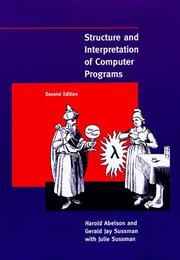 Structure and Interpretation of Computer Programs (SICP)Harold Abelson, Gerald Jay Sussman · 1985
 Population and housingUnited States. Bureau of the Census · 1971
 The Computer and the BrainJohn von Neumann · 1958
 The web application hacker's handbookDafydd Stuttard, Marcus Pinto · 2007
- 📕United States censuses of population and housing, 1960United States. Bureau of the Census · 1961
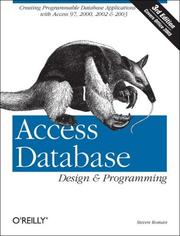 Access database design & programmingSteven Roman · 1997
Ranked by number of editions on Open Library, a rough measure of how lasting a book is.
🔗 Related topics
- GSM 03.38 In mobile telephony GSM 03.38 or 3GPP 23.038 is a character encoding used in GSM networks for SMS (Short Message Service), CB (Cell Broadcast) and USSD…
- GSM 03.40 GSM 03.40 or 3GPP TS 23.040 is a mobile telephony standard describing the format of the Transfer Protocol Data Units (TPDU) part of the Short Message Transfer…
- User Data Header User Data Header (UDH) is a binary structure which may be present at the start of a short message in the Short Message Service in GSM. It does not contain…
- Short Message Peer-to-Peer Short Message Peer-to-Peer (SMPP) in the telecommunications industry is an open, industry standard protocol designed to provide a flexible data communication…
- SMS Short Message Service (SMS) is a mostly paid text messaging service component of most telephone, Internet and mobile device systems. It uses standardized…
- UTF-16 UTF-16 (16-bit Unicode Transformation Format) is a character encoding that supports all 1,112,064 valid code points of Unicode. The encoding is variable-length…
- Concatenated SMS In the cellular phone industry, mobile phones and their networks sometimes support concatenated short message service (or concatenated SMS) to overcome…
- Cell Broadcast Cell Broadcast (CB) is a method of simultaneously sending short messages to multiple mobile telephone users in a defined area. It is defined by the ETSI's…