Live briefing
Everything about D-Bus
Linux message-oriented middleware
D-Bus is a message-oriented middleware mechanism that allows communication between multiple processes running concurrently on the same machine. D-Bus was developed as part of the freedesktop.org project, initiated by GNOME developer Havoc Pennington to standardize services provided by Linux desktop environments such as GNOME and KDE Plasma. Wikipedia →
🧭 Start here: a 6-step reading path
- Read the overview: D-BusA 5-minute orientation
- Skim a recent paper: Electric bus planning & scheduling: A review of related problems and methodologiesInfluential work since 2022
- Pick up a classic book: Don't Let the Pigeon Drive the Bus!The most-reprinted book on the subject
- Read the landmark paper: Coupling superconducting qubits via a cavity busCited 1,267 times
- Go sideways: UdevA closely related topic
- Go sideways: HAL (software)A closely related topic
📖 Definitions
No dictionary entry for this exact phrase.
🗂️ The subject at a glance
🏆 Landmark papers (most cited)
Coupling superconducting qubits via a cavity bus
Optimal Replacement of GMC Bus Engines: An Empirical Model of Harold Zurcher
An Improved Droop Control Method for DC Microgrids Based on Low Bandwidth Communication With DC Bus Voltage Restoration and Enhanced Current Sharing Accuracy
An integrated digital microfluidic lab-on-a-chip for clinical diagnostics on human physiological fluidsThe Science and Application of Droplets in Microfluidic Devices.Electronic supplementary information (ESI) available: five video clips showing: high-speed transport of a droplet of blood across 4 electrodes; sample injection into an on-chip reservoir using an external pipette; droplet formation from an on-chip reservoir using only electrowetting forces; droplets moving in-phase on a 3-phase transport bus; and a pipelined glucose assay, showing sample and reagent droplet formation, mixing, splitting and colorimetric reaction. See http://www.rsc.org/suppdata/lc/b4/b403341h/
An extension of the Bus asteroid taxonomy into the near-infrared
Bus-invert coding for low-power I/O
Rule based energy management strategy for a series–parallel plug-in hybrid electric bus optimized by dynamic programming
Planning, operation, and control of bus transport systems: A literature review
🆕 Influential since 2022
Electric bus planning & scheduling: A review of related problems and methodologies
A survey on demand-responsive public bus systems
A review of electric bus vehicles research topics – Methods and trends
Learning-based model predictive energy management for fuel cell hybrid electric bus with health-aware control
Energy sources durability energy management for fuel cell hybrid electric bus based on deep reinforcement learning considering future terrain information
📚 Books worth reading
 Don't Let the Pigeon Drive the Bus!Mo Willems · 2003
 OriginalsAdam Grant · 2001
 Leaders Eat LastSimon Sinek · 1900
 Fieldbus and Networking in Process AutomationSunit Kumar Sen · 2014
 New and Old WarsMary Kaldor · 1999
 The international encyclopedia of mutual funds, closed-end funds, and real estate investment trustsPeter Madlem, Peter W. Madlem · 1999
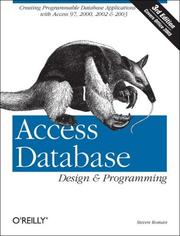 Access database design & programmingSteven Roman · 1997
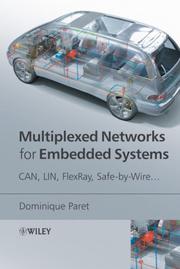 Multiplexed networks for embedded systemsDominique Paret · 2007
Ranked by number of editions on Open Library, a rough measure of how lasting a book is.
🔗 Related topics
- Udev udev (userspace /dev) is a device manager and a device API set for the Linux kernel. As the successor of devfsd and hotplug, udev primarily manages device…
- HAL (software) HAL (Hardware Abstraction Layer or rather Hardware Annotation Library) is a software subsystem for UNIX-like operating systems providing hardware abstraction…
- NetworkManager NetworkManager is a daemon that sits on top of libudev and other Linux kernel interfaces (and a couple of other daemons) and provides a high-level interface…
- Systemd systemd is a software suite for system and service management on Linux built to unify service configuration and behavior across Linux distributions. Its…
- GVfs GVfs (abbreviation for GNOME virtual file system) is GNOME's userspace virtual filesystem designed to work with the I/O abstraction of GIO, a library available…
- UPower UPower (previously DeviceKit-power) is a piece of middleware (an abstraction layer) for power management on Linux systems. It enumerates power sources…
- Wayland (protocol) Wayland is a communication protocol that specifies the communication between a display server and its clients, as well as a C library implementation of…
- Freedesktop.org freedesktop.org (fd.o), formerly X Desktop Group (XDG), is a project to work on interoperability and shared base technology for free-software desktop environmen…