Everything about Continuous function
Mathematical function with no sudden changes
In mathematics, a continuous function is a function such that a small variation of its argument induces at most a small variation of its value. This implies there are no abrupt changes in value, known as discontinuities. More precisely, a function is continuous if arbitrarily small changes in its value can be assured by restricting its argument to sufficiently small changes. A discontinuous function is a function that is not continuous. Until the 19th century, mathematicians largely relied on intuitive notions of continuity and considered only continuous functions. The epsilon–delta definition of a limit was introduced to formalize the definition of continuity. Wikipedia →
🧭 Start here: a 6-step reading path
- Read the overview: Continuous functionA 5-minute orientation
- Skim a recent paper: Generalizing the sigmoid function using continuous-valued logicInfluential work since 2022
- Pick up a classic book: Real AnalysisThe most-reprinted book on the subject
- Read the landmark paper: The standardisation of terminology of lower urinary tract function: Report from the standardisation sub‐committee of the International Continence SocietyCited 5,731 times
- Go sideways: EquicontinuityA closely related topic
- Go sideways: Uniform continuityA closely related topic
📖 Definitions
Noun a function whose value at any point in its domain is equal its limit at the same point
Noun a function from one topological space to another, such that the inverse image of any open set is open
🏆 Landmark papers (most cited)
The standardisation of terminology of lower urinary tract function: Report from the standardisation sub‐committee of the International Continence Society
Watershed of a continuous function
Dependence function for continuous bivariate densities
The local Hölder function of a continuous function
Projections onto continuous function spaces
An Increasing Continuous Singular Function
Insertion of a continuous function
Topology on Soft Continuous Function Spaces
🆕 Influential since 2022
Generalizing the sigmoid function using continuous-valued logic
Vascular Function in Continuous Flow LVADs: Implications for Clinical Practice
Online estimation of objective function for continuous-time deterministic systems
Depth map continuous super-resolution with local implicit guidance function
Shrink central continuous function
📚 Books worth reading
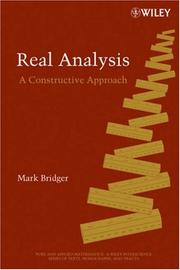 Real AnalysisMark Bridger · 2006
 Continuous lattices and domainsGerhard Gierz, G. Gierz · 2003
- 📕Equipped for the futureSondra Gayle Stein · 1995
 Séries de Fourier absolument convergentesJean-Pierre Kahane · 1970
- 📕Equipped for the future content standardsSondra Gayle Stein · 2000
 The theory and applications of harmonic integralsW. V. D. Hodge · 1941
 Continuity TheoryLouis Nel · 2016
 Analytic capacity and rational approximationLawrence Zalcman · 1968
Ranked by number of editions on Open Library, a rough measure of how lasting a book is.
🔗 Related topics
- Equicontinuity In mathematical analysis, a family of functions is equicontinuous if all the functions are continuous and they have equal variation over a given neighbourhood…
- Uniform continuity In mathematics, a real function f of real numbers is said to be uniformly continuous if there is a positive real number δ such that function values over…
- Limit of a function In mathematics, the limit of a function is a fundamental concept in calculus and analysis concerning the behavior of that function near a particular input…
- Semi-continuity In mathematical analysis, semicontinuity (or semi-continuity) is a property of extended real-valued functions that is weaker than continuity. An extended…
- Heine theorem Heine's theorem, named after the German mathematician Eduard Heine, establishes a link in mathematical analysis between limits of functions and limits…
- Uniform convergence In the mathematical field of analysis, uniform convergence is a mode of convergence of functions stronger than pointwise convergence. A sequence of functions…
- Limit (mathematics) In mathematics, a limit is the value that a function (or sequence) approaches as the argument (or index) approaches some value. Limits of functions are…
- Limit inferior and limit superior In mathematics, the limit inferior and limit superior (or limes inferior and limes superior) of a sequence can be thought of as limiting (that is, eventual…