Live briefing

Everything about Content Credentials
Digital media metadata specification for provenance and authenticity
Content Credentials are cryptographically signed metadata structures, known as C2PA manifests, that provide a verifiable record of a digital asset's provenance and modification history. Defined by the C2PA specifications, this architecture establishes a core set of technical assertions, while supporting custom schemas to extend metadata regarding authorship, content intent, and machine-readable usage preferences. Wikipedia →
🧭 Start here: a 6-step reading path
- Read the overview: Content CredentialsA 5-minute orientation
- Skim a recent paper: This Election Year, Look for Content Credentials: Media organizations combat deepfakes and disinformation with digital manifestsInfluential work since 2022
- Pick up a classic book: The web application hacker's handbookThe most-reprinted book on the subject
- Read the landmark paper: Health and Medical Blog Content and Its Relationships With Blogger Credentials and Blog HostCited 30 times
- Go sideways: Content Authenticity InitiativeA closely related topic
- Go sideways: CloudinaryA closely related topic
📖 Definitions
No dictionary entry for this exact phrase.
🏆 Landmark papers (most cited)
Health and Medical Blog Content and Its Relationships With Blogger Credentials and Blog Host
Self-protected content for information-centric networking architectures using verifiable credentials
🆕 Influential since 2022
This Election Year, Look for Content Credentials: Media organizations combat deepfakes and disinformation with digital manifests
Observational analysis of general nutrition-related YouTube videos for content creator credentials, references, and sponsorships
Content Credentials: Trust Issues, Technical Solutions and Future Perspectives Using Encrypted Metadata in Image Processing
📚 Books worth reading
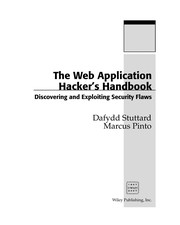 The web application hacker's handbookDafydd Stuttard, Marcus Pinto · 2007
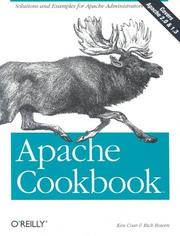 Apache CookbookKen Coar, Rich Bowen · 2003
 Alexander PopeNetta Murray Goldsmith · 2002
 Developing portfolios in educationRuth S. Johnson · 2006
 Getting Ready for BenjaminRita M. Kissen · 2002
 The Credentials of ChristianityMartin J. Scott · 1920
 Black Hat PythonJustin Seitz, Tim Arnold · 2014
- 📕Sustainable Concrete SolutionsCostas Georgopoulos, Andrew Minson · 2014
Ranked by number of editions on Open Library, a rough measure of how lasting a book is.
🔗 Related topics
- Content Authenticity Initiative The Content Authenticity Initiative (CAI) is an industry advocacy coalition and corporate business unit of Adobe Inc. that promotes the adoption of digital…
- Cloudinary Cloudinary is a SaaS company providing cloud media management services for websites and apps. The company is headquartered in San Jose, California. Cloudinary…
- Leica SL3 The Leica SL3 is a full-frame mirrorless interchangeable-lens camera released by Leica Camera on 7 March 2024. The camera uses the Leica L-Mount lenses…
- Digital Negative Digital Negative (DNG) is an open source, lossless, well defined camera RAW data container with the goal to replace a range of proprietary, closed source…
- ONVIF ONVIF is a global and open industry forum that provides and promotes standardized interfaces for IP-based physical security products. ONVIF specifications…
- High Efficiency Image File Format High Efficiency Image File Format (HEIF) is a digital container format for storing individual digital images and image sequences. The standard covers multimedia…
- SWF SWF (/ˈswɪf/) is a defunct Adobe Flash file format that is used for multimedia, vector graphics and ActionScript. Originating with FutureWave Software…
- Epson R-D1 The Epson R-D1 is a digital rangefinder camera introduced by Epson in March 2004, and the first digital rangefinder ever commercially produced. The R-D1…