Everything about Consumerism
Acquisition of goods beyond essential needs

Consumerism is a socio-cultural and economic phenomenon in which the aspirations of many individuals include the acquisition of goods and services beyond those necessary for survival or traditional displays. In contemporary consumer society, the purchase and the consumption of products have evolved beyond the mere satisfaction of basic human needs, transforming into an activity that is not only economic but also cultural, social, and even identity-forming. It emerged in Western Europe and the United States during the Industrial Revolution and became widespread around the 20th century. In economics, consumerism refers to policies that emphasize consumption. It is the consideration that the free choice of consumers should strongly inform the choice by manufacturers of what is produced and how, and therefore influence the economic organization of a society. Wikipedia →
🧭 Start here: a 6-step reading path
- Read the overview: ConsumerismA 5-minute orientation
- Skim a recent paper: Green consumerism, green perceived value, and restaurant revisit intention: Millennials' sustainable consumption with moderating effect of green perceived qualityInfluential work since 2022
- Pick up a classic book: American PsychoThe most-reprinted book on the subject
- Read the landmark paper: Self-Identity and the Theory of Planned Behavior: Assesing the Role of Identification with "Green Consumerism"Cited 877 times
- Go sideways: Anti-consumerismA closely related topic
- Go sideways: HyperconsumerismA closely related topic
📖 Definitions
Noun A materialistic attachment to possessions with a heavy use of consumables; a lifestyle based on such tendencies.
Noun An economic theory that increased consumption is beneficial to a nation's economy in the long run.
Noun A policy or social movement of protecting and informing consumers through honesty in advertising and packaging, as well as improved safety standards, among other measures.
🗂️ The subject at a glance
🏆 Landmark papers (most cited)
Self-Identity and the Theory of Planned Behavior: Assesing the Role of Identification with "Green Consumerism"
Politics in the Supermarket: Political Consumerism as a Form of Political Participation
Motivational complexity of green consumerism
Hotel customers’ environmentally responsible behavioral intention: Impact of key constructs on decision in green consumerism
Examining green consumerism motivational drivers: does premium price and demographics matter to green purchasing?
Consumerism, reflexivity and the medical encounter
New sex for old: lifestyle, consumerism, and the ethics of aging well
Consumer scapegoatism and limits to green consumerism
🆕 Influential since 2022
Green consumerism, green perceived value, and restaurant revisit intention: Millennials' sustainable consumption with moderating effect of green perceived quality
Frontiers: Spilling the Beans on Political Consumerism: Do Social Media Boycotts and Buycotts Translate to Real Sales Impact?
How does digital media engagement influence sustainability-driven political consumerism among Gen Z tourists?
Ethical Consumerism in Emerging Markets: Opportunities and Challenges
ChatGPT-powered chatbot as a green evangelist: an innovative path toward sustainable consumerism in E-commerce
📚 Books worth reading
 American PsychoBret Easton Ellis, Mariano Antolín Rato · 1991
 The Space MerchantsFrederik Pohl, Cyril M. Kornbluth · 1952
 Consumer-citizens of ChinaKelly Tian · 2010
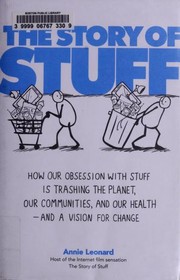 The story of stuffAnnie Leonard · 2010
 Days of War, Nights of LoveCrimethInc. · 2001
 Political virtue and shoppingMichele Micheletti · 2003
 Marianne in the MarketLisa Tiersten · 2001
 Food Consumption in Global PerspectiveJ. Klein, A. Murcott · 2014
Ranked by number of editions on Open Library, a rough measure of how lasting a book is.
🔗 Related topics
- Anti-consumerism Anti-consumerism is a sociopolitical ideology. It has been described as "intentionally and meaningfully excluding or cutting goods from one's consumption…
- Hyperconsumerism Hyperconsumerism, hyper-consumerism, hyperconsumption or hyper-consumption is the consumption of goods beyond one's necessities and the associated significant…
- Consumer revolution The consumer revolution refers to the period from approximately 1600 to 1750 in England in which there was a marked increase in the consumption and variety…
- Frugality Frugality is the quality of being frugal, sparing, thrifty, prudent, or economical in the consumption of resources, whether they be food, time, or money…
- Conspicuous consumption In sociology and in economics, the term conspicuous consumption describes and explains the consumer practice of buying and using goods of a higher quality…
- Economic materialism Economic materialism, known colloquially simply as materialism, is a personal attitude that attaches importance to acquiring (and often consuming) material…
- Commodity fetishism In Marxist philosophy, commodity fetishism (German: Warenfetischismus) is a belief that social aspects of economic goods are inherent to them, rather than…
- Consumer capitalism Consumer capitalism is a theoretical economic and social political condition in which consumer demand is manipulated in a deliberate and coordinated way…