Live briefing
Everything about Constraint learning
In constraint satisfaction backtracking algorithms, constraint learning is a technique for improving efficiency. It works by recording new constraints whenever an inconsistency is found. This new constraint may reduce the search space, as future partial evaluations may be found inconsistent without further search. Clause learning is the name of this technique when applied to propositional satisfiability. Wikipedia →
🧭 Start here: a 6-step reading path
- Read the overview: Constraint learningA 5-minute orientation
- Skim a recent paper: Artificial intelligence and smart vision for building and construction 4.0: Machine and deep learning methods and applicationsInfluential work since 2022
- Pick up a classic book: Artificial intelligenceThe most-reprinted book on the subject
- Read the landmark paper: Generalized Transfer Subspace Learning Through Low-Rank ConstraintCited 256 times
- Go sideways: BackjumpingA closely related topic
- Go sideways: BackmarkingA closely related topic
📖 Definitions
No dictionary entry for this exact phrase.
🗂️ The subject at a glance
🏆 Landmark papers (most cited)
Generalized Transfer Subspace Learning Through Low-Rank Constraint
Nonlinear Constraint Network Optimization for Efficient Map Learning
Constraint, syntax and meaning in paired-associate learning
Learning optimal decision trees using constraint programming
Semisupervised Metric Learning by Maximizing Constraint Margin
Mixed-Integer Optimization with Constraint Learning
Adjacency Constraint for Efficient Hierarchical Reinforcement Learning
Self-Taught Semisupervised Dictionary Learning With Nonnegative Constraint
🆕 Influential since 2022
Artificial intelligence and smart vision for building and construction 4.0: Machine and deep learning methods and applications
Unsupervised Feature Selection via Adaptive Graph Learning and Constraint
Optimization with constraint learning: A framework and survey
Learning for Constrained Optimization: Identifying Optimal Active Constraint Sets
WaveFunctionCollapse: Content Generation via Constraint Solving and Machine Learning
📚 Books worth reading
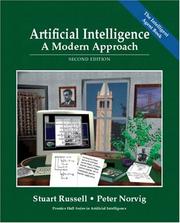 Artificial intelligenceStuart J. Russell, Peter Norvig · 1994
- 📕Intuitive reasoning and the enhanced novelty filterDavid Yeo · 1997
Ranked by number of editions on Open Library, a rough measure of how lasting a book is.
🔗 Related topics
- Backjumping In constraint programming and SAT solving, backjumping (also known as non-chronological backtracking or intelligent backtracking) is an enhancement for…
- Backmarking In constraint satisfaction, backmarking is a variant of the backtracking algorithm. Backmarking works like backtracking by iteratively evaluating variables…
- Constrained optimization In mathematical optimization, constrained optimization (in some contexts called constraint optimization) is the process of optimizing an objective function…
- Local search (constraint satisfaction) In constraint satisfaction, local search is an incomplete method for finding a solution to a problem. It is based on iteratively improving an assignment…
- Local consistency In constraint satisfaction, local consistency conditions are properties of constraint satisfaction problems related to the consistency of subsets of variables…
- Hybrid algorithm (constraint satisfaction) Within artificial intelligence and operations research for constraint satisfaction a hybrid algorithm solves a constraint satisfaction problem by the combinatio…
- Constraint satisfaction problem Constraint satisfaction problems (CSPs) are mathematical questions defined as a set of objects whose state must satisfy a number of constraints or limitations…
- 2-satisfiability In computer science, 2-satisfiability, 2-SAT or just 2SAT is a computational problem of assigning values to variables, each of which has two possible values…