Everything about Conditional probability distribution
Probability theory and statistics concept
In probability theory and statistics, the conditional probability distribution is a probability distribution that describes the probability of an outcome given the occurrence of a particular event. Given two jointly distributed random variables and, the conditional probability distribution of given is the probability distribution of when is known to be a particular value; in some cases the conditional probabilities may be expressed as functions containing the unspecified value of as a parameter. When both and are categorical variables, a conditional probability table is typically used to represent the conditional probability. The conditional distribution contrasts with the marginal distribution of a random variable, which is its distribution without reference to the value of the other variable. Wikipedia →
🧭 Start here: a 6-step reading path
- Read the overview: Conditional probability distributionA 5-minute orientation
- Skim a recent paper: Joint Wasserstein distance matching under conditional probability distribution for cross-domain fault diagnosis of rotating machineryInfluential work since 2022
- Pick up a classic book: ProbabilityThe most-reprinted book on the subject
- Read the landmark paper: Comparative performance of indicator algorithms for modeling conditional probability distribution functionsCited 71 times
- Go sideways: Standard probability spaceA closely related topic
- Go sideways: Notation in probability and statisticsA closely related topic
📖 Definitions
Noun The probability distribution of a random variable given the known outcome of another random variable.
🏆 Landmark papers (most cited)
Comparative performance of indicator algorithms for modeling conditional probability distribution functions
Probability, conditional probability and complementary cumulative distribution functions in performance assessment for radioactive waste disposal
On the characterization of a joint probability distribution by conditional distributions
Maximum Entropy-based Conditional Probability Distribution Runoff Model
Probability distribution and conditional averaging in turbulent flows
The Probability Distribution of Conditional Classification Error
Conditional Probability Distribution and Bivariate Probability Distribution in Long-Term V-t Characteristics
Conditional Probability Distributions.
🆕 Influential since 2022
Joint Wasserstein distance matching under conditional probability distribution for cross-domain fault diagnosis of rotating machinery
Locally private estimation of conditional probability distribution for random forest in multimedia applications
Improved Conditional Probability Distribution Distance Measurement Based on Feature Selection and Weighting
Edgeworth Theoretic Characterization of Mutual Information Underneath Joint and Conditional Probability Distribution in Algorithmic Information Theory
Characterization of Probability Distributions through Conditional Expectation of Order Statistics
📚 Books worth reading
 ProbabilityHenry McKean · 2014
 Benford's LawAlex Ely Kossovsky · 2014
 Stochastic Optimal Control and the U.S. Financial Debt CrisisJerome L. Stein · 2012
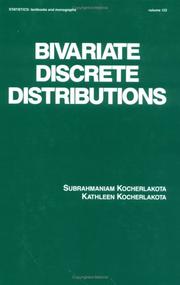 Bivariate discrete distributionsKocherlakota, Subrahmaniam · 1992
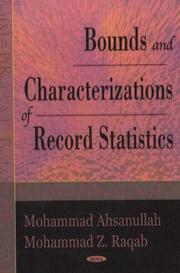 Bounds and characterizations of record statisticsM. Ahsanullah · 2005
 Probability And StatisticsAkhilesh Pawar, Pawan K. Chaurasya · 2011
- 📕Leaving unemployment for self-employment : an empirical studyReize· Frank. · 2003
- 📕Statistical studies of income, poverty and inequality in EuropeNicholas T. Longford · 2015
Ranked by number of editions on Open Library, a rough measure of how lasting a book is.
🔗 Related topics
- Standard probability space In probability theory, a standard probability space, also called Lebesgue–Rokhlin probability space or just Lebesgue space (the latter term is ambiguous)…
- Notation in probability and statistics Probability theory and statistics have some commonly used conventions, in addition to standard mathematical notation and mathematical symbols. Random variables…
- Markov property In probability theory and statistics, the Markov property is the memoryless property of a stochastic process, which means that its future evolution is…
- Random element In probability theory, random element is a generalization of the concept of random variable to more complicated spaces than the simple real line. The concept…
- Kernel embedding of distributions In machine learning, the kernel embedding of distributions (also called the kernel mean or mean map) comprises a class of nonparametric methods in which…
- Martingale (probability theory) In probability theory, a martingale is a stochastic process in which the expected value of the next observation, given all prior observations, is equal…
- Doob–Dynkin lemma In probability theory, the Doob–Dynkin lemma, named after Joseph L. Doob and Eugene Dynkin (also known as the factorization lemma), characterizes the situation…
- Doob's martingale convergence theorems In mathematics – specifically, in the theory of stochastic processes – Doob's martingale convergence theorems are a collection of results on the limits…