Live briefing

Everything about Computing education
Pedagogy of computer science
Computer science education or computing education is the field of teaching and learning the discipline of computer science and computational thinking. The field of computer science education encompasses a wide range of topics, from basic programming skills to advanced algorithm design and data analysis. It is a rapidly growing field that is essential to preparing students for careers in the technology industry as well as other fields that require computational skills. Wikipedia →
🧭 Start here: a 6-step reading path
- Read the overview: Computing educationA 5-minute orientation
- Skim a recent paper: Computing Education in the Era of Generative AIInfluential work since 2022
- Pick up a classic book: The Autobiography of Benjamin FranklinThe most-reprinted book on the subject
- Read the landmark paper: Critical Inquiry in a Text-Based Environment: Computer Conferencing in Higher EducationCited 3,335 times
- Go sideways: Mark GuzdialA closely related topic
- Go sideways: Computational thinkingA closely related topic
📖 Definitions
No dictionary entry for this exact phrase.
🏆 Landmark papers (most cited)
Critical Inquiry in a Text-Based Environment: Computer Conferencing in Higher Education
Education for computing professionals
Early computing education
Deploying a Wearable Computing Platform for Computing Education
Computing Education for Intercultural Learning
Computing education for sustainability
Transforming K-12 computing education
Revitalizing Computing Science Education
🆕 Influential since 2022
Computing Education in the Era of Generative AI
Cognitive Load Theory in Computing Education Research: A Review
Sustainability in Computing Education: A Systematic Literature Review
Role of cloud computing in management and education
Learning Theories Use and Relationships in Computing Education Research
📚 Books worth reading
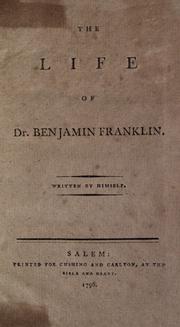 The Autobiography of Benjamin FranklinBenjamin Franklin · 1791
 Artificial Intelligence Applications and InnovationsLazaros S. Iliadis, Ilias Maglogiannis · 2006
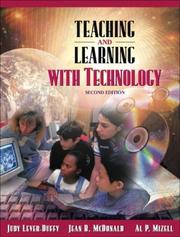 Teaching and learning with technologyJudy Lever-Duffy, Jean B. McDonald · 2002
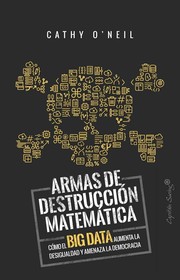 Weapons of Math DestructionCathy O'Neil · 2016
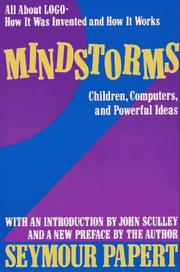 MindstormsSeymour Papert · 1980
 e-Learning and the Science of InstructionRuth C. Clark, Richard E. Mayer · 2007
 Computer science illuminatedNell B. Dale, Nell Dale · 2002
 School financeAllan Odden, Allan R Odden · 1992
Ranked by number of editions on Open Library, a rough measure of how lasting a book is.
🔗 Related topics
- Mark Guzdial Mark Joseph Guzdial (born September 7, 1962) is a Professor in the College of Engineering at the University of Michigan. He was formerly a professor in…
- Computational thinking Computational thinking (CT) refers to the thought processes involved in formulating problems so their solutions can be represented as computational steps…
- Peter J. Denning Peter James Denning (born January 6, 1942) is an American computer scientist and writer. He is best known for pioneering work in virtual memory, especially…
- Computer science Fundamental areas of computer science Computer science is the study of computation, information, and automation, together with their associated phenomena…
- Daniel Zingaro Daniel Zingaro is a professor at the University of Toronto Mississauga. His main areas of research are in evaluating Computer science education and online…
- David J. Malan David Jay Malan (/meɪlɛn/) is an American computer scientist and professor. Malan is a Gordon McKay Professor of Computer Science at Harvard University…
- Valerie Barr Valerie Barr is an American computer scientist, and is the Margaret Hamilton Distinguished Professor of Computer Science at Bard College. She formerly…
- David Gries David Gries (born April 26, 1939) is an American computer scientist at Cornell University, mainly known for his books The Science of Programming (1981)…