Live briefing

Everything about Complex network
Network with non-trivial topological features
In the context of network theory, a complex network is a graph (network) with non-trivial topological features—features that do not occur in simple networks such as lattices or random graphs but often occur in networks representing real systems. The study of complex networks is a young and active area of scientific research inspired largely by empirical findings of real-world networks such as computer networks, biological networks, technological networks, brain networks, and social networks. Wikipedia →
🧭 Start here: a 6-step reading path
- Read the overview: Complex networkA 5-minute orientation
- Skim a recent paper: Robustness and resilience of complex networksInfluential work since 2022
- Pick up a classic book: Job scheduling strategies for parallel processingThe most-reprinted book on the subject
- Read the landmark paper: Statistical mechanics of complex networksCited 16,465 times
- Go sideways: Scale-free networkA closely related topic
- Go sideways: Barabási–Albert modelA closely related topic
📖 Definitions
No dictionary entry for this exact phrase.
🗂️ The subject at a glance
🏆 Landmark papers (most cited)
Statistical mechanics of complex networks
The Structure and Function of Complex Networks
Complex network measures of brain connectivity: Uses and interpretations
Complex brain networks: graph theoretical analysis of structural and functional systems
Complex networks: Structure and dynamics
Error and attack tolerance of complex networks
Exploring complex networks
Network Motifs: Simple Building Blocks of Complex Networks
🆕 Influential since 2022
Robustness and resilience of complex networks
An effective CNN and Transformer complementary network for medical image segmentation
Complex-network-based traffic network analysis and dynamics: A comprehensive review
Emergent stability in complex network dynamics
Complex systems and network science: a survey
📚 Books worth reading
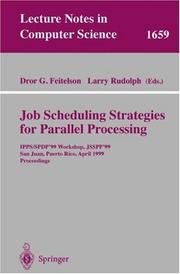 Job scheduling strategies for parallel processingJSSPP'99 (1999 San Juan, P.R.), IPPS/SPDP '98 Workshop (1998 Orlando, Fla.) · 1995
 Pattern RecognitionCheng-Lin Liu · 2012
 Advances in Swarm IntelligenceYing Tan · 2012
 Parallel Processing and Applied MathematicsRoman Wyrzykowski · 2003
 Computational Science and Its Applications - ICCSA 2014Beniamino Murgante, Sanjay Misra · 2014
 Complex-Valued Neural NetworksAkira Hirose · 2007
 Algorithms and Models for the Web GraphAnthony Bonato · 2007
 Computer GamesTristan Cazenave, Mark H.M. Winands · 2014
Ranked by number of editions on Open Library, a rough measure of how lasting a book is.
🔗 Related topics
- Scale-free network A scale-free network is a network whose degree distribution follows a power law, at least asymptotically. That is, the fraction P(k) of nodes in the network…
- Barabási–Albert model The Barabási–Albert (BA) model is an algorithm for generating random scale-free networks using a preferential attachment mechanism. Several natural and…
- Watts–Strogatz model The Watts–Strogatz model is a random graph generation model that produces graphs with small-world properties, including short average path lengths and…
- Small-world network Small-world network example Hubs are bigger than other nodes A small-world network is a graph characterized by a high clustering coefficient and low distances…
- Co-stardom network In social network analysis, the co-stardom network represents the collaboration graph of film actors i.e. movie stars. The co-stardom network can be represented…
- Hierarchical network model Hierarchical network models are iterative algorithms for creating networks which are able to reproduce the unique properties of the scale-free topology…
- Network science Network science is an academic field which studies complex networks such as telecommunication networks, computer networks, biological networks, cognitive…
- Clustering coefficient In graph theory, a clustering coefficient is a measure of the degree to which nodes in a graph tend to cluster together. Evidence suggests that in most…