Live briefing
Everything about Complex gain
In electronics, the concept of gain is the amount a electrical system changes the magnitude of an input signal. The complex gain is the effect that circuitry has on not only the amplitude but also the phase of a sine wave signal. Such an input signal can pass through an electric circuit that increases the magnitude and for example take differing amounts of time, or intentionally be phase shifted with electrical components. The term complex arises from complex numbers and there usefulness in expressing wave phenomena via Euler's formula. Wikipedia →
🧭 Start here: a 6-step reading path
- Read the overview: Complex gainA 5-minute orientation
- Skim a recent paper: Fixed-time synchronization of multilayered complex dynamic networks via quantized variable-gain saturated controlInfluential work since 2022
- Pick up a classic book: AntifragileThe most-reprinted book on the subject
- Read the landmark paper: Radio interferometric gain calibration as a complex optimization problemCited 181 times
- Go sideways: Exponential response formulaA closely related topic
- Go sideways: Superheterodyne transmitterA closely related topic
📖 Definitions
No dictionary entry for this exact phrase.
🗂️ The subject at a glance
🏆 Landmark papers (most cited)
Radio interferometric gain calibration as a complex optimization problem
Homer Regulates Gain of Ryanodine Receptor Type 1 Channel Complex
Spectral properties of complex unit gain graphs
Copy number gain at Xp22.31 includes complex duplication rearrangements and recurrent triplications
A New Statistical Model of the Complex Nakagami-m Fading Gain
Hearing in Complex Environments: Auditory Gain Control, Attention, and Hearing Loss
Steady-state ab initio laser theory for complex gain media
Is Using A Complex Control Gain in Three-Phase FLLs Reasonable?
🆕 Influential since 2022
Fixed-time synchronization of multilayered complex dynamic networks via quantized variable-gain saturated control
Anisotropic virtual gain and large tuning of particles’ scattering by complex-frequency excitations
Gain-scheduled state estimation for discrete-time complex networks under bit-rate constraints
Distributed Pinning Impulsive Control on Complex Networks Under Dual-Channel Attacks: An Average Delayed Impulsive Gain Scheme
Globally Exponential Synchronization of Delayed Complex Dynamic Networks With Average Impulsive Delay‐Gain
📚 Books worth reading
 AntifragileNassim Nicholas Taleb, Genís Sánchez Barberán · 2012
 Signals and SystemsAlan V. Oppenheim, Alan S. Willsky · 1983
 Life 3.0Max Tegmark · 2017
 Children's anxietyPeter Appleton · 2008
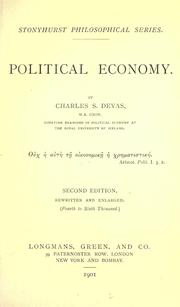 Political EconomyCharles S. Devas · 1892
 Regulatory mechanisms of striated muscle contractionSetsuro Ebashi · 2007
 Exploring positive identities and organizationsLaura Morgan Roberts · 2009
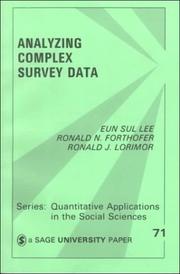 Analyzing complex survey dataEun Sul Lee · 1989
Ranked by number of editions on Open Library, a rough measure of how lasting a book is.
🔗 Related topics
- Exponential response formula In mathematics, the exponential response formula (ERF), also known as exponential response and complex replacement, is a method used to find a particular…
- Superheterodyne transmitter Superheterodyne transmitter is a radio or TV transmitter which uses an intermediate frequency signal in addition to radio frequency signal. There are two…
- Differential gain Differential gain is a kind of linearity distortion that affects the amplification and transmission of analog signals. It can visibly affect color saturation…
- Transfer function In engineering, a transfer function (also known as system function or network function) of a system, sub-system, or component is a mathematical function…
- Frequency compensation In electronics engineering, frequency compensation is a technique used in amplifiers, and especially in amplifiers employing negative feedback. It usually…
- Ripple (electrical) Ripple (specifically ripple voltage) in electronics is the residual periodic variation of the DC voltage within a power supply which has been derived from…
- Parametric oscillator A parametric oscillator is a driven harmonic oscillator in which the oscillations are driven by varying some parameters of the system at some frequencies…
- Finite impulse response In signal processing, a finite impulse response (FIR) filter is a filter whose impulse response (or response to any finite length input) is of finite duration…