Everything about Complementary sequences
Pairs of sequences
In applied mathematics, complementary sequences (CS) are pairs of sequences with the useful property that their out-of-phase aperiodic autocorrelation coefficients sum to zero. Binary complementary sequences were first introduced by Marcel J. E. Golay in 1949. In 1961–1962 Golay gave several methods for constructing sequences of length 2N and gave examples of complementary sequences of lengths 10 and 26. In 1974 R. J. Turyn gave a method for constructing sequences of length mn from sequences of lengths m and n which allows the construction of sequences of any length of the form 2N10K26M. Wikipedia →
🧭 Start here: a 6-step reading path
- Read the overview: Complementary sequencesA 5-minute orientation
- Skim a recent paper: AbLang: an antibody language model for completing antibody sequencesInfluential work since 2022
- Pick up a classic book: cDNA preparation and characterizationThe most-reprinted book on the subject
- Read the landmark paper: Complementary sets of sequencesCited 527 times
- Go sideways: Wiener–Khinchin theoremA closely related topic
- Go sideways: Haar waveletA closely related topic
📖 Definitions
No dictionary entry for this exact phrase.
🏆 Landmark papers (most cited)
Complementary sets of sequences
Z-complementary Binary Sequences
Complementary sequences for ISI channel estimation
Complementary Alu sequences mediate enhancer–promoter selectivity
Ambiguity functions of complementary sequences (Corresp.)
Efficient pulse compressor for golay complementary sequences
Periodic complementary binary sequences
New complementary pairs of sequences
🆕 Influential since 2022
AbLang: an antibody language model for completing antibody sequences
Variant calling and benchmarking in an era of complete human genome sequences
A chromosome scale tomato genome built from complementary PacBio and Nanopore sequences alone reveals extensive linkage drag during breeding
Complementary Sequences and Receiving Filters Design for Suppressing Interrupted Sampling Repeater Jamming
Complementary Roles of Primate Dorsal Premotor and Pre-Supplementary Motor Areas to the Control of Motor Sequences
📚 Books worth reading
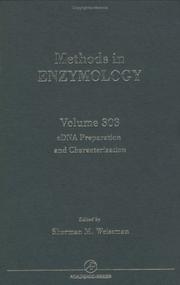 cDNA preparation and characterizationSherman M. Weissman · 1999
- 📕Identification of amino acid-starvation induced mRNAs in Fao rat hepatoma cellsNeil Frank Shay · 1990
- 📕Genome directory · 1995
- 📕Genome directory. · 1995
Ranked by number of editions on Open Library, a rough measure of how lasting a book is.
🔗 Related topics
- Wiener–Khinchin theorem In applied mathematics and statistics, the Wiener–Khinchin theorem or Wiener–Khintchine theorem, also known as the Wiener–Khinchin–Einstein theorem or…
- Haar wavelet In mathematics, the Haar wavelet is a sequence of rescaled "square-shaped" functions which together form a wavelet family or basis. Wavelet analysis is…
- Autocorrelation Autocorrelation, sometimes known as serial correlation in the discrete time case, measures the correlation of a signal with a delayed copy of itself. Essentiall…
- Chirp Z-transform The chirp Z-transform (CZT) is a generalization of the discrete Fourier transform (DFT). While the DFT samples the Z plane at uniformly-spaced points along…
- Discrete-time Fourier transform In mathematics, the discrete-time Fourier transform (DTFT) is a form of Fourier analysis that is applicable to a sequence of discrete values. The DTFT…
- Multidimensional spectral estimation Multidimension spectral estimation is a generalization of spectral estimation, normally formulated for one-dimensional signals, to multidimensional signals…
- Multiplier (Fourier analysis) In Fourier analysis, a multiplier operator is a type of linear operator, or transformation of functions. These operators act on a function by altering…
- Discrete Fourier transform In mathematics, the discrete Fourier transform (DFT) is a discrete version of the Fourier transform that converts a finite sequence of numbers into another…