Live briefing
Everything about Comparison of application virtualization software
Application virtualization software refers to both application virtual machines and software responsible for implementing them. Application virtual machines are typically used to allow application bytecode to run portably on many different computer architectures and operating systems. The application is usually run on the computer using an interpreter or just-in-time compilation (JIT). There are often several implementations of a given virtual machine, each covering a different set of functions. Wikipedia →
🧭 Start here: a 6-step reading path
- Read the overview: Comparison of application virtualization softwareA 5-minute orientation
- Pick up a classic book: Computer NetworksThe most-reprinted book on the subject
- Go sideways: Java virtual machineA closely related topic
- Go sideways: Just-in-time compilationA closely related topic
📖 Definitions
No dictionary entry for this exact phrase.
🗂️ The subject at a glance
🏆 Landmark papers (most cited)
- No matching papers found.
📚 Books worth reading
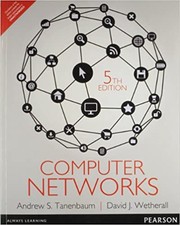 Computer NetworksAndrew S. Tanenbaum, John David Wetherall · 1981
 Technical CommunicationJohn M. Lannon · 2000
 The web application hacker's handbookDafydd Stuttard, Marcus Pinto · 2007
 Virtual crowdsNuria Pelechano · 2008
 Big Data AnalyticsSrinath Srinivasa · 2012
 Product Lifecycle Management. Towards Knowledge-Rich EnterprisesLouis Rivest · 2012
 Emerging Technologies for Information Systems, Computing, and ManagementW. Eric Wong · 2013
 Data structures & algorithms in JavaRobert Lafore · 2003
Ranked by number of editions on Open Library, a rough measure of how lasting a book is.
🔗 Related topics
- Java virtual machine A Java virtual machine (JVM) is a virtual machine that enables a computer to run Java programs as well as programs written in other languages, referred…
- Just-in-time compilation Just-in-time (JIT) compilation (also dynamic translation or run-time compilations) is compilation of computer code during execution of a program at run…
- Interpreter (computing) In computing, an interpreter is software that executes source code without first compiling it to machine code. An interpreted runtime environment differs…
- Bytecode Bytecode (also called portable code or p-code) is an instruction set designed for efficient execution by a software interpreter. Unlike human-readable…
- Java performance In software development, the programming language Java was historically considered slower than the fastest third-generation typed languages such as C and…
- JVM bytecode JVM bytecode is the instruction set architecture (ISA) of the Java virtual machine (JVM), the language to which Java and other JVM-compatible source code…
- Java Native Interface The Java Native Interface (or Native Method Interface) is a foreign function interface designed for non-Java programming frameworks. The JNI enables Java…
- Java (programming language) Java is a high-level, general-purpose, memory-safe, object-oriented programming language. It is intended to let programmers write once, run anywhere (WORA)…