Everything about Communication complexity
Complexity of sending information in a distributed algorithm
In theoretical computer science, communication complexity studies the amount of communication required to solve a problem when the input to the problem is distributed among two or more parties. The study of communication complexity was first introduced by Andrew Yao in 1979, while studying the problem of computation distributed among several machines. The problem is usually stated as follows: two parties each receive a -bit string and. The goal is for Alice to compute the value of a certain function,, that depends on both and, with the least amount of communication between them. Wikipedia →
🧭 Start here: a 6-step reading path
- Read the overview: Communication complexityA 5-minute orientation
- Skim a recent paper: Co-occurrence networks reveal more complexity than community composition in resistance and resilience of microbial communitiesInfluential work since 2022
- Pick up a classic book: Job scheduling strategies for parallel processingThe most-reprinted book on the subject
- Read the landmark paper: CellPhoneDB: inferring cell–cell communication from combined expression of multi-subunit ligand–receptor complexesCited 3,406 times
- Go sideways: Private simultaneous message passingA closely related topic
- Go sideways: Conditional disclosure of secretsA closely related topic
📖 Definitions
No dictionary entry for this exact phrase.
🏆 Landmark papers (most cited)
CellPhoneDB: inferring cell–cell communication from combined expression of multi-subunit ligand–receptor complexes
Nonlocality and communication complexity
Communication complexity of PRAMs
Quantum Communication Complexity
The Communication Complexity of Correlation
Quantum Entanglement and Communication Complexity
Rounds in Communication Complexity Revisited
Privacy and Communication Complexity
🆕 Influential since 2022
Co-occurrence networks reveal more complexity than community composition in resistance and resilience of microbial communities
Integrating Low-Complexity and Flexible Sensing Into Communication Systems
Quantum Contextuality Provides Communication Complexity Advantage
Non-IID quantum federated learning with one-shot communication complexity
Does information and communication technologies affect economic complexity?
📚 Books worth reading
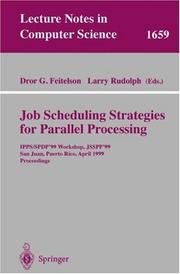 Job scheduling strategies for parallel processingJSSPP'99 (1999 San Juan, P.R.), IPPS/SPDP '98 Workshop (1998 Orlando, Fla.) · 1995
 Pattern RecognitionCheng-Lin Liu · 2012
 Advances in Swarm IntelligenceYing Tan · 2012
 Parallel Processing and Applied MathematicsRoman Wyrzykowski · 2003
 Anti-ŒdipeGilles Deleuze, Félix Guattari · 1972
 Parallel Computing TechnologiesVictor Malyshkin · 2003
 Model And Data EngineeringLadjel Bellatreche · 2011
 Computational Science and Its Applications - ICCSA 2014Beniamino Murgante, Sanjay Misra · 2014
Ranked by number of editions on Open Library, a rough measure of how lasting a book is.
🔗 Related topics
- Private simultaneous message passing Private simultaneous message passing (PSM) is a primitive, studied in information-theoretic cryptography, which allows multiple, non-communicating, parties…
- Conditional disclosure of secrets Conditional disclosure of secrets (CDS) is a primitive, studied in information-theoretic cryptography, that allows distributed, non-communicating parties…
- Hidden matching problem In quantum information, the hidden matching problem is a computational complexity problem that can be solved using quantum protocols: Let n {\displaystyle…
- Yao's principle In computational complexity theory, Yao's principle (also called Yao's minimax principle or Yao's lemma) relates the performance of randomized algorithms…
- Multiparty communication complexity In theoretical computer science, multiparty communication complexity is the study of communication complexity in the setting where there are more than…
- Decision tree model In computational complexity theory, the decision tree model is the model of computation in which an algorithm can be considered to be a decision tree,…
- Arthur–Merlin protocol In computational complexity theory, an Arthur–Merlin protocol, introduced by Babai (1985), is an interactive proof system in which the verifier's coin…
- Log-rank conjecture In theoretical computer science, the log-rank conjecture states that the deterministic communication complexity of a two-party Boolean function is polynomially…