Everything about Commons
Concept in political economics

The commons are the cultural and natural resources accessible to all members of a society, including natural materials such as air, water, and a habitable Earth. These resources are held in common even when owned privately or publicly. Commons can also be understood as natural resources that groups of people manage for individual and collective benefit. Characteristically, this involves a variety of informal norms and values employed for a governance mechanism. Commons can also be defined as a social practice of governing a resource not by state or market but by a community of users that self-governs the resource through institutions that it creates. Wikipedia →
🧭 Start here: a 6-step reading path
- Read the overview: CommonsA 5-minute orientation
- Skim a recent paper: The planetary commons: A new paradigm for safeguarding Earth-regulating systems in the AnthropoceneInfluential work since 2022
- Pick up a classic book: Book of common prayerThe most-reprinted book on the subject
- Read the landmark paper: The Tragedy of the CommonsCited 18,893 times
- Go sideways: Common-pool resourceA closely related topic
- Go sideways: Elinor OstromA closely related topic
📖 Definitions
Noun plural of common
Noun A public area, especially a dining hall, at a college or university; a similar shared space elsewhere.
Noun A common (common land); especially, a central section of (usually an older) town, designated as a shared area.
Noun The mutual good of all; the abstract concept of resources shared by more than one, for example air, water, information.
🗂️ The subject at a glance
🏆 Landmark papers (most cited)
The Tragedy of the Commons
The Struggle to Govern the Commons
Revisiting the Commons: Local Lessons, Global Challenges
Reputation helps solve the ‘tragedy of the commons’
Pathway Commons, a web resource for biological pathway data
COPING WITH TRAGEDIES OF THE COMMONS
The National Sleep Research Resource: towards a sleep data commons
The Tragedy of the Commons: Twenty-two years later
🆕 Influential since 2022
The planetary commons: A new paradigm for safeguarding Earth-regulating systems in the Anthropocene
Unlocking the Power of Digital Commons: Data Cooperatives as a Pathway for Data Sovereign, Innovative and Equitable Digital Communities
Dismantling AI capitalism: the commons as an alternative to the power concentration of Big Tech
Database Commons: A Catalog of Worldwide Biological Databases
The commonification of the public under new municipalism: Commons–state institutions in Naples and Barcelona
📚 Books worth reading
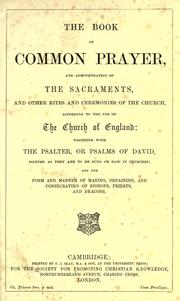 Book of common prayerChurch of England, J. A. Maurault · 1537
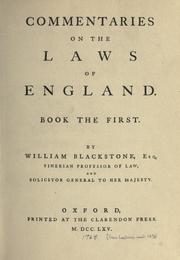 Commentaries on the laws of EnglandSir William Blackstone · 1721
 Mutual AidPeter Kropotkin · 1891
 Parliamentary Debates, House of Commons - Bound VolumesU K Stationery Office · 2000
 Commentaries on the common lawHerbert Broom · 1856
 The history of English law before the time of Edward ISir Frederick Pollock · 1895
 The common lawOliver Wendell Holmes, Jr. · 1881
 Black's Law DictionaryBryan A. Garner · 1990
Ranked by number of editions on Open Library, a rough measure of how lasting a book is.
🔗 Related topics
- Common-pool resource In economics, a common-pool resource (CPR) is a type of good consisting of a natural or human-made resource system (e.g. an irrigation system or fishing…
- Elinor Ostrom Elinor Claire "Lin" Ostrom (née Awan; August 7, 1933 – June 12, 2012) was an American political scientist and political economist whose work was associated…
- Bloomington school The Bloomington school or Bloomington school of political economy is a new institutionalist research tradition in political science, economics, sociology…
- Tragedy of the commons The tragedy of the commons is the idea that when a resource is shared and can benefit the individual at a cost to the community, it is rational for the…
- Community management Community management or common-pool resource management is the management of a common resource or issue by a community through the collective action of…
- Common good (economics) Common goods (also called common-pool resources) are defined in economics as goods that are rivalrous and non-excludable. Thus, they constitute one of…
- John Baden John A. Baden is founder and chairman of the Foundation for Research on Economics and the Environment (FREE) based in Bozeman, Montana. In addition to…
- Knowledge commons The term "knowledge commons" refers to information, data, and content that is collectively owned and managed by a community of users, particularly over…