Live briefing
Everything about Comma code
A comma code is a type of prefix-free code in which a comma, a particular symbol or sequence of symbols, occurs at the end of a code word and never occurs otherwise. This is an intuitive way to express arrays. Wikipedia →
🧭 Start here: a 6-step reading path
- Read the overview: Comma codeA 5-minute orientation
- Skim a recent paper: Perancangan Aplikasi Kumpulan Resep Masakan Dengan Menerapkan Algoritmaternary Comma Code (TCC)Influential work since 2022
- Pick up a classic book: Automate the Boring Stuff with PythonThe most-reprinted book on the subject
- Read the landmark paper: Comma-Free CodesCited 184 times
- Go sideways: Tunstall codingA closely related topic
- Go sideways: Universal code (data compression)A closely related topic
📖 Definitions
No dictionary entry for this exact phrase.
🗂️ The subject at a glance
🏆 Landmark papers (most cited)
Comma-Free Codes
Periodic correlations in DNA sequences and evidence suggesting their evolutionary origin in a comma-less genetic code
Comma-free error-correcting codes
Idiosyncratic findings in trichoscopy of tinea capitis: Comma, zigzag hairs, corkscrew, and morse code-like hair
The dermoscopic comma, zigzag, and bar code-like hairs: Markers of fungal infection of the hair follicles
Maximal dinucleotide comma-free codes
Complementary coding conforms to the primeval comma-less code
Completing comma-free codes
🆕 Influential since 2022
Perancangan Aplikasi Kumpulan Resep Masakan Dengan Menerapkan Algoritmaternary Comma Code (TCC)
Property based analysis: Optimality of RNY comma-free code versus circular code (X) after frameshift errors
Comparative Analysis of the Ternary Comma Code (TCC) Algorithm and the Fibonacci Algorithm in Text File Compression
📚 Books worth reading
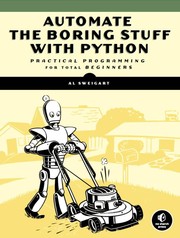 Automate the Boring Stuff with PythonAl Sweigart · 2015
 The bestseller codeJodie Archer · 2016
 The Conspirators HierarchyJohn Coleman · 1992
 Lapsing into a CommaBill Walsh · 2000
 Introduction to C ProgrammingReema Thareja · 2013
 Learn to Program with PythonIrv Kalb · 2016
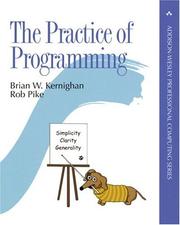 The Practice of Programming (Addison-Wesley Professional Computing Series)Brian W. Kernighan · 1999
 IntroductionGary Haggard , Wade Hutchison , Christy Shibata · 2013
Ranked by number of editions on Open Library, a rough measure of how lasting a book is.
🔗 Related topics
- Tunstall coding In computer science and information theory, Tunstall coding is a form of entropy coding used for lossless data compression. Tunstall coding was the subject…
- Universal code (data compression) In data compression, a universal code for integers is a prefix code that maps the positive integers onto binary codewords, with the additional property…
- Unary coding Unary coding, or the unary numeral system, is an entropy encoding that represents a natural number, n, with n ones followed by a zero (if the term natural…
- Non-standard positional numeral systems Non-standard positional numeral systems here designates numeral systems that may loosely be described as positional systems, but that do not entirely comply…
- Cantor function In mathematics, the Cantor function is an example of a function that is continuous, but not absolutely continuous. It is a notorious counterexample in…
- M-ary tree In graph theory, an m-ary tree (for nonnegative integers m) (also known as n-ary, k-ary, k-way or generic tree) is an arborescence (or, for some authors…
- Ternary numeral system A ternary /ˈtɜːrnəri/ numeral system (also called base 3 or trinary) has three as its base. Although ternary most often refers to a system in which the…
- Golomb coding Golomb coding is a lossless data compression method using a family of data compression codes invented by Solomon W. Golomb in the 1960s. Alphabets following…