Everything about Color Cell Compression
Lossy color image compression algorithm

Color Cell Compression is a lossy image compression algorithm developed by Campbell et al., in 1986, which can be considered an early forerunner of modern texture compression algorithms, such as S3 Texture Compression and Adaptive Scalable Texture Compression. It is closely related to Block Truncation Coding, another lossy image compression algorithm, which predates Color Cell Compression, in that it uses the dominant luminance of a block of pixels to partition said pixels into two representative colors. The primary difference between Block Truncation Coding and Color Cell Compression is that the former was designed to compress grayscale images and the latter was designed to compress color images. Also, Block Truncation Coding requires that the standard deviation of the colors of pixels in a block be computed in order to compress an image, whereas Color Cell Compression does not use the standard deviation. Both algorithms, though, can compress an image down to effectively 2 bits per pixel. Wikipedia →
🧭 Start here: a 6-step reading path
- Read the overview: Color Cell CompressionA 5-minute orientation
- Pick up a classic book: Neural Information ProcessingThe most-reprinted book on the subject
- Go sideways: S3 Texture CompressionA closely related topic
- Go sideways: Apple VideoA closely related topic
📖 Definitions
No dictionary entry for this exact phrase.
🗂️ The subject at a glance
🏆 Landmark papers (most cited)
- No matching papers found.
📚 Books worth reading
 Neural Information ProcessingTingwen Huang · 2012
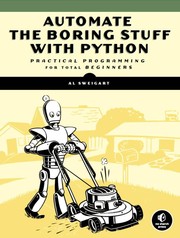 Automate the Boring Stuff with PythonAl Sweigart · 2015
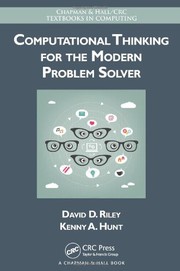 Computational Thinking for the Modern Problem SolverKenny A. Hunt, David D. Riley · 2014
 Pattern recognition and image analysisEarl Gose · 1996
- 📕Microsoft Word 2010Timothy J. O'Leary · 2011
 Awareness Techniques by William SwygardWilliam Swygard · 1971
 Awareness TechniquesWilliam Swygard · 1970
 Handbook of Electrical MethodsThe Electrical World. · 1913
Ranked by number of editions on Open Library, a rough measure of how lasting a book is.
🔗 Related topics
- S3 Texture Compression S3 Texture Compression (S3TC) (sometimes also called DXTn, DXTC, or BCn) is a group of related lossy texture compression algorithms originally developed…
- Apple Video Apple Video is a lossy video compression and decompression algorithm (codec) developed by Apple Inc. and first released as part of QuickTime 1.0 in 1991…
- Color histogram In image processing and photography, a color histogram is a representation of the distribution of colors in an image. For digital images, a color histogram…
- BMP file format The BMP file format (also known as bitmap image file) the Windows Bitmap file format, or simply bitmap, is a raster graphics image file format used to…
- Raster graphics In computer graphics and digital photography, a raster graphic, raster image, or simply raster is a digital image made up of a rectangular grid of tiny…
- Smacker video Smacker video is a video file format (with the .SMK file extension) developed by RAD Game Tools, and primarily used for full-motion video in video games…
- PCX PCX, standing for PiCture eXchange, is an image file format developed by the now-defunct ZSoft Corporation of Marietta, Georgia, United States. It was…
- Grayscale In digital photography, computer-generated imagery, and colorimetry, a grayscale (American English) or greyscale (Commonwealth English) image is one in…