Everything about Collaborative learning
Situation in which two or more people learn or attempt to learn something together
Collaborative learning is a situation in which two or more people learn or attempt to learn something together. Unlike individual learning, people engaged in collaborative learning capitalize on one another's resources and skills. More specifically, collaborative learning is based on the model that knowledge can be created within a population where members actively interact by sharing experiences and take on asymmetric roles. Put differently, collaborative learning refers to methodologies and environments in which learners engage in a common task where each individual depends on and is accountable to each other. These include both face-to-face conversations and computer discussions. Methods for examining collaborative learning processes include conversation analysis and statistical discourse analysis. Wikipedia →
🧭 Start here: a 6-step reading path
- Read the overview: Collaborative learningA 5-minute orientation
- Skim a recent paper: Student learning performance in online collaborative learningInfluential work since 2022
- Pick up a classic book: Learning togetherThe most-reprinted book on the subject
- Read the landmark paper: Interorganizational Collaboration and the Locus of Innovation: Networks of Learning in BiotechnologyCited 5,713 times
- Go sideways: Child development of the Indigenous peoples of the AmericasA closely related topic
- Go sideways: Computer-supported collaborative learningA closely related topic
📖 Definitions
No dictionary entry for this exact phrase.
🏆 Landmark papers (most cited)
Interorganizational Collaboration and the Locus of Innovation: Networks of Learning in Biotechnology
Benefits of collaborative learning
Collaborative Learning between Peers
EXPLORING COLLABORATIVE ONLINE LEARNING
Collaborative Learning
Collaborative Online Learning
Monitoring collaborative activities in computer supported collaborative learning
Collaborative learning online
🆕 Influential since 2022
📚 Books worth reading
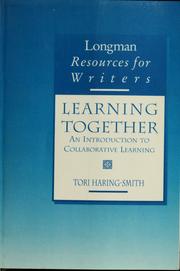 Learning togetherTori Haring-Smith · 1992
 Writing TogetherTori Haring-Smith · 1987
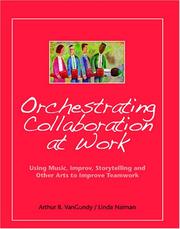 Orchestrating Collaboration at WorkArthur B. VanGundy, Linda Naiman · 2003
 Collaborative Leadership And Global TransformationTimothy Stagich · 2001
 Governance and performance in the German public research sectorDorothea Jansen · 2010
 Peer response groups in actionKaren I. Spear, Karen Spear · 1993
- 📕Degrees of freedomFrankie Todd · 1989
- 📕Literacy as a collaborative experienceKathy Gnagey Short · 1989
Ranked by number of editions on Open Library, a rough measure of how lasting a book is.
🔗 Related topics
- Child development of the Indigenous peoples of the Americas Styles of children’s learning across various indigenous communities in the Americas have been practiced for centuries prior to European colonization and…
- Computer-supported collaborative learning Computer-supported collaborative learning (CSCL) is a pedagogical approach wherein learning takes place via social interaction using a computer or through…
- Indigenous education Indigenous education encompasses a collection of time-honored traditions that can be applied across contexts and cultures. Rooted in communal learning…
- Situated learning Situated learning is a theory that explains an individual's acquisition of professional skills and includes research on apprenticeship into how legitimate…
- Informal education Informal education is a general term for education that can occur outside traditional lectures or school-based learning systems. The term includes customized…
- Active learning Active learning is "a method of learning in which students are actively or experientially involved in the learning process and where there are different…
- Informal learning Informal learning is characterized by a low degree of planning and organizing of the learning context, learning support, learning time, and learning objectives…
- Constructivist teaching methods Constructivist teaching is based on constructivism. It rests on the belief that learning occurs as learners are actively involved in a process of meaning…