Everything about Cluster state
Entangled state of qubits
In quantum information and quantum computing, a cluster state is a type of highly entangled state of multiple qubits. Cluster states are generated in lattices of qubits with Ising type interactions. A cluster C is a connected subset of a d-dimensional lattice, and a cluster state is a pure state of the qubits located on C. They are different from other types of entangled states such as GHZ states or W states in that it is more difficult to eliminate quantum entanglement in the case of cluster states. Another way of thinking of cluster states is as a particular instance of graph states, where the underlying graph is a connected subset of a d-dimensional lattice. Cluster states are especially useful in the context of the one-way quantum computer. For a comprehensible introduction to the topic see Briegel (2009). Wikipedia →
🧭 Start here: a 6-step reading path
- Read the overview: Cluster stateA 5-minute orientation
- Skim a recent paper: A comprehensive survey of clustering algorithms: State-of-the-art machine learning applications, taxonomy, challenges, and future research prospectsInfluential work since 2022
- Pick up a classic book: Theory of light hydrogenic bound statesThe most-reprinted book on the subject
- Read the landmark paper: Deterministic generation of a two-dimensional cluster stateCited 427 times
- Go sideways: Graph stateA closely related topic
- Go sideways: Mølmer–Sørensen gateA closely related topic
📖 Definitions
Noun Any of a subset of graph states that can be fitted to a regular cubic lattice
🏆 Landmark papers (most cited)
Deterministic generation of a two-dimensional cluster state
Cluster-state quantum computation
Excited state coupled cluster methods
State‐specific multireference coupled‐cluster theory
Controlled Teleportation Using Four-Particle Cluster State
Scaling in steady-state cluster-cluster aggregation
Teleportation of Two-Particle Entangled State via Cluster State
N -reference, M-state coupled-cluster method: Merging the state-universal and reduced multireference coupled-cluster theories
🆕 Influential since 2022
A comprehensive survey of clustering algorithms: State-of-the-art machine learning applications, taxonomy, challenges, and future research prospects
Deterministic generation of indistinguishable photons in a cluster state
Cluster State as a Noninvertible Symmetry-Protected Topological Phase
High-fidelity multiphoton-entangled cluster state with solid-state quantum emitters in photonic nanostructures
Asymmetric Bidirectional Controlled Quantum Teleportation Using Eight Qubit Cluster State
📚 Books worth reading
 Theory of light hydrogenic bound statesMichael I. Eides, Howard Grotch · 2006
- 📕Communities in the leadHarold L. Fossum · 1993
 Quantum Mechanical Cluster Calculations in Solid State StudiesR. W. Grimes, C. R. A. Catlow · 1992
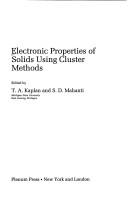 Electronic properties of solids using cluster methodsS. D. Mahanti · 1995
 Fifty Years of Change on the U.S.-Mexico BorderJames Gerber · 2007
 Clusters and fullerenesAdriatico Research Conference on Clusters and Fullerenes (1992 Trieste, Italy), V. Kumar · 1992
 Theory and Applications of the Cluster Variation and Path Probability MethodsJ. L. Morán-López · 1996
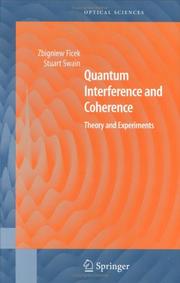 Quantum interference and coherenceZbigniew Ficek · 2004
Ranked by number of editions on Open Library, a rough measure of how lasting a book is.
🔗 Related topics
- Graph state In quantum computing, a graph state is a special type of multi-qubit state that can be represented by a graph. Each qubit is represented by a vertex of…
- Mølmer–Sørensen gate In quantum computing, Mølmer–Sørensen gate scheme (or MS gate) refers to an implementation procedure for various multi-qubit quantum logic gates used mostly…
- One-way quantum computer The one-way quantum computer, also known as measurement-based quantum computer (MBQC), is a method of quantum computing that first prepares an entangled…
- KLM protocol The KLM scheme or KLM protocol is an implementation of linear optical quantum computing (LOQC) developed in 2000 by Emanuel Knill, Raymond Laflamme and…
- W state The W state is an entangled quantum state of three qubits which in the bra-ket notation has the following shape | W ⟩ = 1 3 ( | 001 ⟩ + | 010 ⟩ + | 100…
- Monogamy of entanglement In quantum physics, monogamy is the property of quantum entanglement that restricts entanglement from being freely shared between arbitrarily many parties…
- Quantum complex network Quantum complex networks are complex networks whose nodes are quantum computing devices. Quantum mechanics has been used to create secure quantum communications…
- Fracton (subdimensional particle) A fracton is an emergent topological quasiparticle excitation which is immobile when in isolation. Many theoretical systems have been proposed in which…