Everything about Cleanthes
3rd-century BC Greek philosopher

Cleanthes, of Assos, was a Greek Stoic philosopher and boxer who was the successor to Zeno of Citium as the second head (scholarch) of the Stoic school in Athens. Originally a boxer, he came to Athens where he took up philosophy, listening to Zeno's lectures. He supported himself by working as a water-carrier at night. After the death of Zeno, c. 262 BC, he became the head of the school, a post he held for the next 32 years. Cleanthes successfully preserved and developed Zeno's doctrines. He originated new ideas in Stoic physics, and developed Stoicism in accordance with the principles of materialism and pantheism. Among the fragments of Cleanthes' writings which have come down to us, the largest is a Hymn to Zeus. His pupil was Chrysippus who became one of the most important Stoic thinkers. Wikipedia →
🧭 Start here: a 6-step reading path
- Read the overview: CleanthesA 5-minute orientation
- Skim a recent paper: Cleanthes’ Two Illustrative Analogies in Part 3 of Hume’s DialoguesInfluential work since 2022
- Pick up a classic book: Modern rhetoricThe most-reprinted book on the subject
- Read the landmark paper: 'Eκπυ´ρωσιζ and the goodness of god in CleanthesCited 14 times
- Go sideways: ChrysippusA closely related topic
- Go sideways: Zeno of CitiumA closely related topic
📖 Definitions
No dictionary entry for this exact phrase.
🗂️ The subject at a glance
🏆 Landmark papers (most cited)
'Eκπυ´ρωσιζ and the goodness of god in Cleanthes
The Zeus Hymns of Cleanthes and Aratus
A Note on Cleanthes and Early Stoic Cosmogony
Hume’s atheism and the role of Cleanthes
Reply to the Comment by Cleanthes A. Nicolaides
THE FRIENDS OF CLEANTHES
Cleanthes and the Vital Heat'
Mysticism, evil, and Cleanthes’ dilemma
🆕 Influential since 2022
Cleanthes’ Two Illustrative Analogies in Part 3 of Hume’s Dialogues
Cleanthes Socraticus I: The Textual Background to SVF I.558-562 and Their Meaning
The Debate between Cleanthes and Philo Regarding the First Illustrative Analogy in Part 3 of Hume’s Dialogues Concerning Natural Religion
The Concept of Divine Transcendence in Cleanthes' Hymn to Zeus
📚 Books worth reading
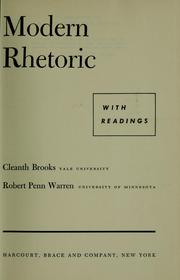 Modern rhetoricCleanth Brooks · 1949
Ranked by number of editions on Open Library, a rough measure of how lasting a book is.
🔗 Related topics
- Chrysippus Chrysippus of Soli (/kraɪˈsɪpəs, krɪ-/; Ancient Greek: Χρύσιππος ὁ Σολεύς, Chrusippos ho Soleus; c. 279 – c. 206 BC) was a Greek Stoic philosopher. He…
- Zeno of Citium Zeno of Citium (/ˈziːnoʊ/; Koine Greek: Ζήνων ὁ Κιτιεύς, Zēnōn ho Kitieus; c. 334 – c. 262 BC) was a Hellenistic philosopher from Citium (Κίτιον, Kition)…
- Crates of Thebes Crates (Ancient Greek: Κράτης ὁ Θηβαῖος; c. 365 – c. 285 BC) of Thebes was a Greek Cynic philosopher, the principal pupil of Diogenes of Sinope and the…
- Dionysius the Renegade Dionysius the Renegade (Ancient Greek: Διονύσιος ὁ Μεταθέμενος; c. 330 BC – c. 250 BC), also known as Dionysius of Heraclea, was a Stoic philosopher and…
- Diogenes of Babylon Diogenes of Babylon (also known as Diogenes of Seleucia; Ancient Greek: Διογένης Βαβυλώνιος; Latin: Diogenes Babylonius; c. 230 – c. 150/140 BC) was a…
- Panaetius Panaetius (/pəˈniːʃiəs/; Ancient Greek: Παναίτιος, romanized: Panaítios; c. 185 – c. 110/109 BC) of Rhodes was an ancient Greek Stoic philosopher. He…
- Arius Didymus Arius Didymus (Ancient Greek: Ἄρειος Δίδυμος Areios Didymos; fl. 1st century BC) was a Stoic philosopher and teacher of Augustus. Fragments of his handbooks…
- Panthoides Panthoides (Greek: Πανθοίδης; fl. c. 275 BC) was a dialectician and philosopher of the Megarian school. He concerned himself with "the logical part of…